Overwatering vs Underwatering: How to Tell the Difference
4 min read
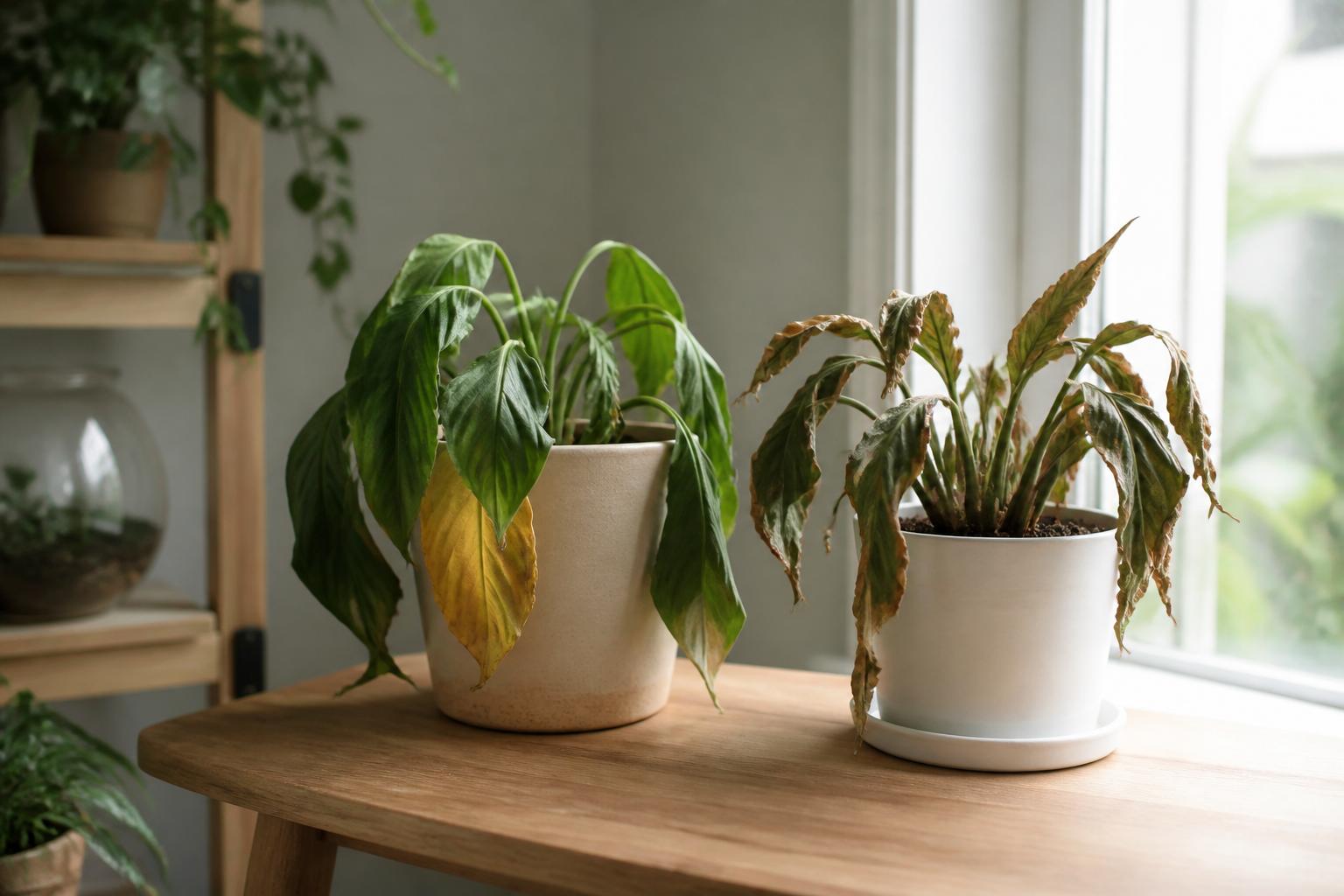
A drooping plant looks thirsty, so most of us reach for the watering can. Sometimes that is exactly right. Other times it is the worst thing we could do, because the plant is drooping from too much water, not too little. The symptoms overlap, which is why so many plants are lost to the wrong fix. This guide shows how to tell the two apart and what to do for each.
Why the symptoms look alike
Roots do two jobs: they take up water and they breathe. A plant with rotting roots from constant wetness cannot take up water, so it wilts as if it were dry. A plant that is truly dry also wilts. Both end up with limp, discolored leaves. That is why you should never diagnose from the leaves alone. The soil gives you the answer.
Check the soil first
This one step settles most cases.
- Finger test. Push a finger two inches into the soil. Dry and dusty means thirsty. Wet and cool means there is plenty of water.
- Metal chopstick. Push a metal chopstick or skewer to the bottom, pull it out, and look. Damp soil clinging to it means moisture remains. We use metal because wood absorbs moisture and misleads on later checks.
- Weight. Lift the pot. A pot that feels heavy days after watering is still wet. A very light pot is dry.
Signs of overwatering
- Lower leaves turning yellow, sometimes with a soft or limp feel
- Soil that stays wet for many days
- Soft, mushy, or dark stem near the soil line
- A musty or sour smell from the pot
- Small flies around the soil, which are often fungus gnats
- Leaves dropping while still green or yellow
- Mold or algae on the soil surface
Signs of underwatering
- Dry, crispy leaf edges and tips
- Leaves that droop but perk up within hours or a day after watering
- Soil that is dry, hard, and pulling away from the pot edge
- A pot that feels very light
- Slow or stalled growth
- Lower leaves turning dry and papery, not soft
The most useful distinction is texture. Overwatered leaves tend to be soft and limp. Underwatered leaves tend to be dry and crisp.
How to rescue an overwatered plant
- Stop watering. Let the soil dry out. For mild cases, this alone may be enough.
- Improve airflow and light. Moving the plant to a brighter spot helps soil dry faster.
- Check the roots if the plant is declining. Slide it out of its pot. Healthy roots are firm and pale. Rotted roots are brown or black, soft, and smell bad.
- Trim the rot. Cut away mushy roots with clean scissors.
- Repot in fresh mix. Use a well-draining mix and a pot with drainage holes, one that is not much larger than the root ball. See our guide to repotting.
- Wait before watering again. Water lightly at first, and keep checking the soil.
Recovery can take weeks. Remove leaves that are fully yellow or mushy, and do not fertilize a stressed plant.
How to rescue an underwatered plant
- Water thoroughly. Pour slowly until water drains from the bottom.
- If water runs straight through, the soil may have become hydrophobic. Soak the pot in a basin of water for twenty to thirty minutes, then let it drain.
- Empty the saucer after fifteen to thirty minutes.
- Trim crispy leaves if you like. They will not recover.
- Build a steady routine. Check regularly, and water when the soil reaches the right dryness for that plant.
Underwatered plants often bounce back quickly, usually within a day or two. That is one reason underwatering is generally easier to recover from than overwatering.
Why plants differ
Different plants want different things. Succulents, snake plants, and ZZ plants like to dry out fully. Ferns and calatheas prefer even moisture. Pothos sits in between. Pot size, pot material, light, temperature, and season all change how fast soil dries, so a schedule that worked in July may flood the plant in January. See how often to water houseplants for how those factors interact.
Preventing both problems
- Use pots with drainage holes.
- Match the soil mix to the plant.
- Water thoroughly, then wait, instead of giving small frequent sips.
- Check the soil before every watering.
- Water less often in winter, when most plants grow more slowly.
- Keep a note of how long each plant takes to dry out. After a few weeks you will know its rhythm.
Yellow leaves can come from many causes, and our guide to why leaves turn yellow covers the rest. If you are unsure what is wrong with a plant, our plant care service can help.
Frequently asked questions
Which is worse for a houseplant, overwatering or underwatering?
Overwatering is generally more dangerous because it can cause root rot, which is hard to reverse. Most underwatered plants recover quickly after a thorough watering.
Can a plant be overwatered and underwatered at the same time?
In effect, yes. Rotting roots cannot absorb water, so the plant can wilt in wet soil. Water that runs through a dry, shrunken root ball can leave the plant thirsty even after you water.
How long does it take to recover from overwatering?
It varies. Mild cases may improve within a couple of weeks once the soil dries. Plants with root rot can take a month or more, and new growth is the best sign of recovery.
Should I water a drooping plant right away?
Check the soil first. If it is dry, water. If it is still wet, watering again will make things worse, so wait and look for another cause.