How Often to Water Houseplants (and How to Know When)
5 min read
Ask ten plant owners how often they water and you will get ten different answers. That is because the honest answer is not a number. How often a houseplant needs water depends on the plant, the pot, the light, and the season, and all of those change. This guide explains what actually drives watering needs, how to check whether a plant is thirsty, and how to water so the roots stay healthy.
Why a watering schedule usually fails
A fixed schedule, such as "every Sunday," treats every plant in your home the same way and ignores everything that changes week to week. A plant in a bright window in July can dry out in four days. The same plant in the same pot in January might take two weeks. Watering on a calendar means you will sometimes water too early, when the roots are still wet, and sometimes too late.
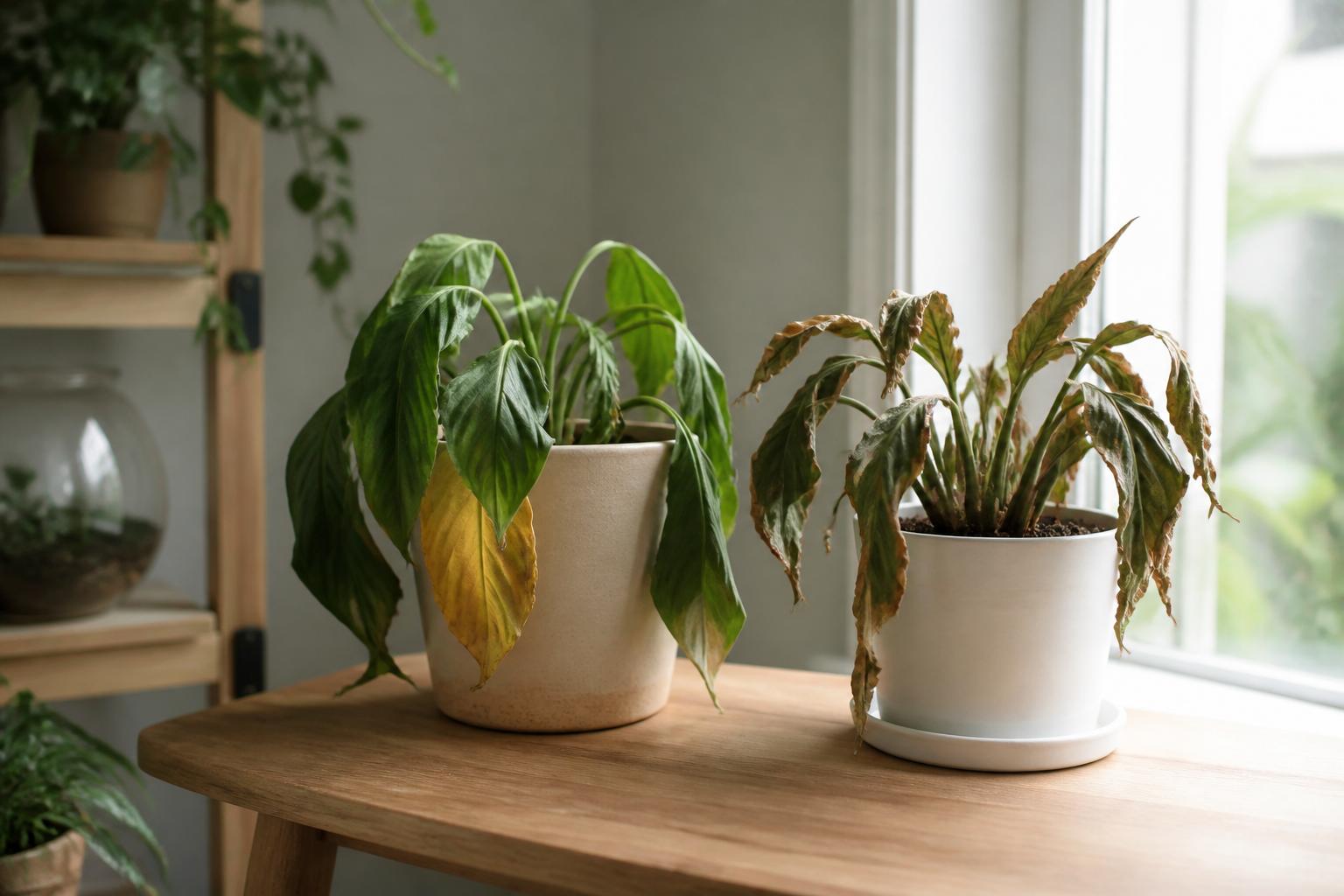
Overwatering is the most common way houseplants are lost. Roots need oxygen as well as water, and soil that stays saturated pushes air out of the pot. Over time the roots begin to rot, and the plant shows symptoms that look a lot like thirst: drooping, yellowing, and dropping leaves. Checking before you water avoids that trap.
Check the soil, not the calendar
There are a few simple ways to tell whether a plant needs water.
- The finger test. Push a finger about an inch or two into the soil. For most tropical foliage plants, if it feels dry at that depth, it is time to water. If it feels damp, wait.
- The lift test. Pick up the pot right after a thorough watering so you learn how heavy it is when wet. A pot that feels noticeably lighter is ready for water. This works well for small and medium pots.
- A metal chopstick. Push a metal chopstick or skewer to the bottom of the pot and pull it out. If it comes out clean, or only dry crumbs fall off, the soil is dry all the way down. If damp soil clings to it, there is still moisture. We suggest metal over wood because wood absorbs moisture and gives misleading readings the next time you use it. Metal reads the same every time and wipes clean.
- A moisture meter. These can help beginners, but cheap ones are often unreliable. Treat the reading as a hint and confirm with your finger.
What changes how fast a plant dries out
Once you know what to look for, it helps to understand why two plants in the same room need different amounts of water.
- Light. More light means more growth and faster water use. A plant near a bright window drinks much faster than one in a dim corner.
- Pot size. A small pot holds little soil and dries quickly. A large pot holds a lot of water for a small plant and can stay wet for weeks.
- Pot material. Unglazed terracotta breathes and dries soil faster. Glazed ceramic and plastic hold moisture longer.
- Soil mix. A chunky mix with bark or perlite drains fast. A dense, peaty mix stays wet longer.
- Temperature and airflow. Warm rooms and moving air dry soil faster. Cool, still rooms slow it down.
- Season. Most plants grow less in winter, so they use less water even indoors.
- Plant type. Leaf thickness and root structure vary a great deal, which brings us to the next point.
Rough starting points by plant type
These are starting points, not rules. Always confirm with the soil.
- Succulents and cacti: Let the soil dry out completely, then water thoroughly. In a bright room that is often every two to four weeks, and less often in winter.
- Snake plants and ZZ plants: These store water in their leaves or rhizomes and tolerate drying out well. Let the soil dry fully between waterings, which is often every two to four weeks.
- Pothos, philodendron, and most aroids: Water when the top inch or two of soil is dry. In average indoor conditions that is often about once a week to every ten days.
- Ferns and calatheas: These prefer soil that stays lightly and evenly moist, but never soggy. Check them more often, and water when the very top of the soil starts to dry.

How to water properly
How you water matters as much as how often.
- Water thoroughly. Pour slowly until water runs out of the drainage holes. Light sips only wet the top of the soil and encourage shallow roots.
- Empty the saucer. After about fifteen to thirty minutes, pour away any water left in the saucer so the roots are not sitting in it.
- Use room temperature water. Very cold water can shock roots, and it is easier on the plant to use water that has been sitting out.
- Try bottom watering for stubborn soil. Set the pot in a few inches of water for about twenty minutes and let the soil draw it up. This helps if water runs straight down the sides without soaking in.
- Rewet very dry soil gradually. If the soil has shrunk away from the pot and water runs right through, water slowly in several rounds, or soak the pot in a basin for a while.
Signs of overwatering and underwatering
The symptoms overlap, which is why checking the soil first is so useful.
Signs of too much water:
- Yellowing lower leaves
- Soft, mushy stems near the soil
- Soil that stays wet for many days
- A musty smell, or small flies hovering around the pot
Signs of too little water:
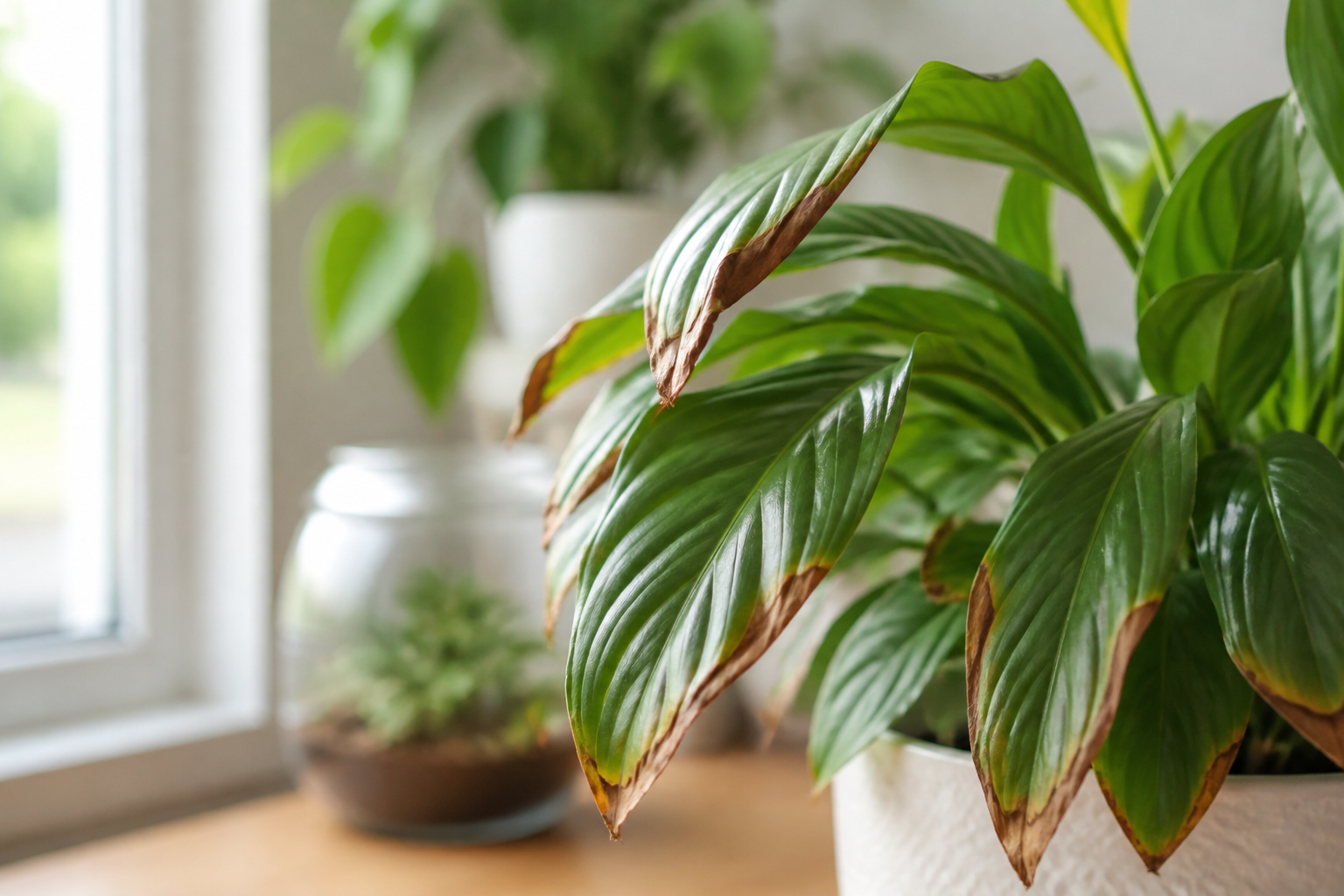
- Dry, crispy leaf edges
- Drooping leaves that perk up after watering
- Soil that is hard and pulling away from the pot
- Slow or stalled growth
Adjusting through the seasons
In spring and summer, plants are growing and you will water more often. In fall and winter, growth slows and the soil takes longer to dry. Many people keep watering on the same rhythm all year and end up overwatering through the cold months. Keep checking the soil, and expect to stretch the time between waterings in winter.
A simple routine that works
- Once or twice a week, walk through and check each plant with your finger or a metal chopstick.
- Water only the ones that are dry at the right depth for their type.
- Water thoroughly, and empty the saucers.
- Make a note of how long each plant takes to dry. After a few weeks you will know each one's pattern better than any schedule could tell you.
If a plant is struggling and you are not sure why, our plant care service can help you work out what is going wrong.
Frequently asked questions
Is it better to underwater or overwater a houseplant?
Underwatering is usually easier to recover from. A dry plant often perks up within a day of a thorough watering, while overwatering can cause root rot, which is much harder to reverse. When you are unsure, check the soil again in a day or two.
Does misting a plant count as watering?
No. Misting only wets the leaves briefly and does not reach the roots. Plants take up water through their roots, so they still need a thorough watering at the soil.
Can I water plants in pots without drainage holes?
You can, but it is riskier because extra water has nowhere to go. A common fix is to keep the plant in a plastic nursery pot with drainage holes and set it inside the decorative pot, then empty any water that collects at the bottom after watering.
Is tap water okay for houseplants?
Most houseplants do fine with tap water. A few, such as calatheas and spider plants, can develop brown leaf tips from minerals or other additives in tap water, and they often do better with filtered or rainwater.