Brown Tips on Houseplant Leaves: Causes and Fixes
4 min read
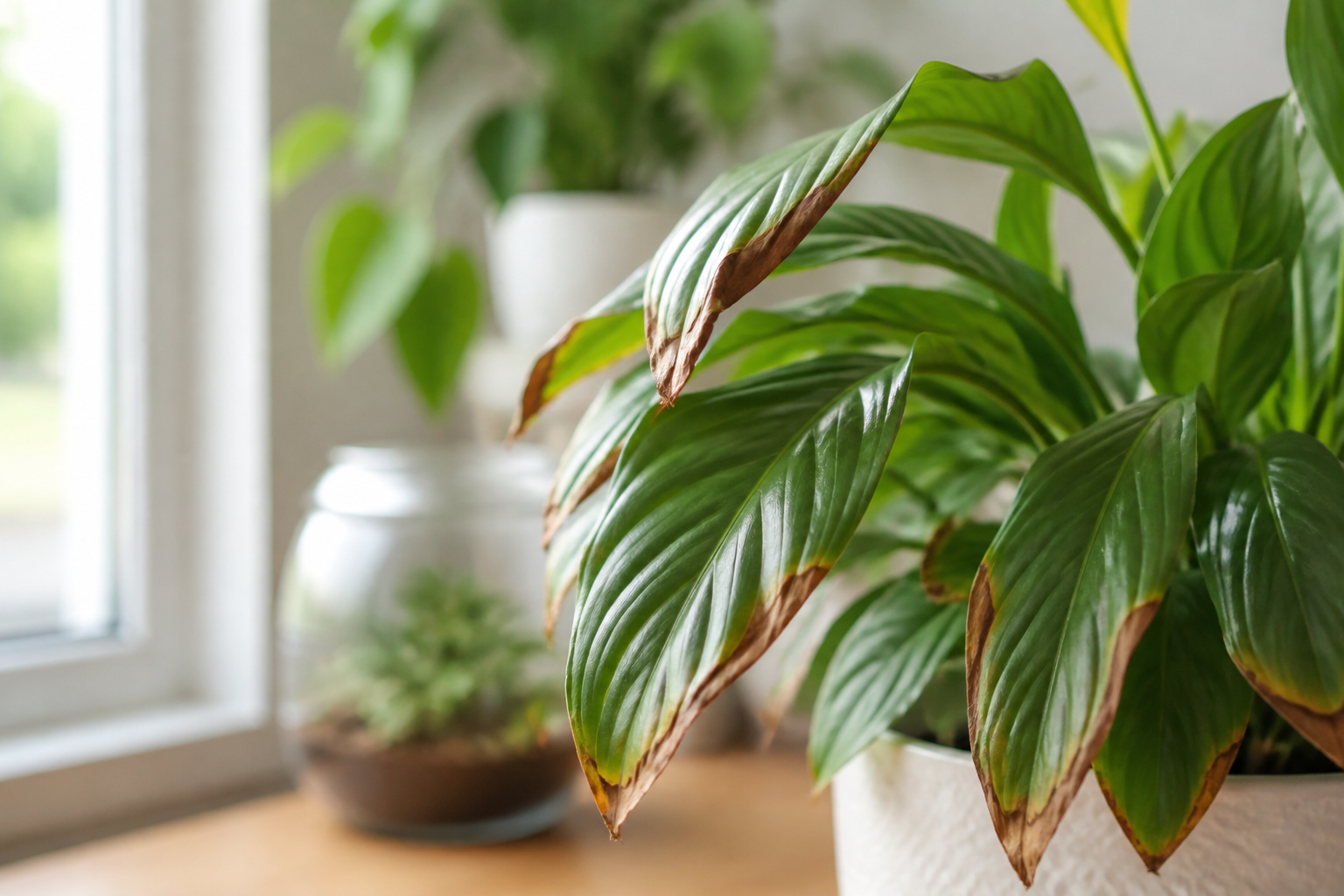
Brown tips are among the most common cosmetic problems on houseplants. They rarely mean the plant is dying. They mean something about its environment or care is slightly off, and the leaf tips, which are the farthest point from the roots, show it first. The good news is that the causes are limited and mostly easy to fix.
What brown tips actually are
The tip of a leaf is the last place water and nutrients reach. When supply falls short, or when salts and minerals build up there, the cells at the tip die and turn brown and crisp. Once a tip has browned it will not turn green again, but the damage usually stops spreading when the cause is fixed.
Cause 1: Dry air
Many popular houseplants come from humid tropical forests. Indoor air, especially in winter when heating is running, can be much drier than they prefer. Plants with thin leaves, such as ferns, calatheas, and prayer plants, are the usual victims. If brown tips appear mostly on those plants, and mostly in winter, air is a prime suspect.
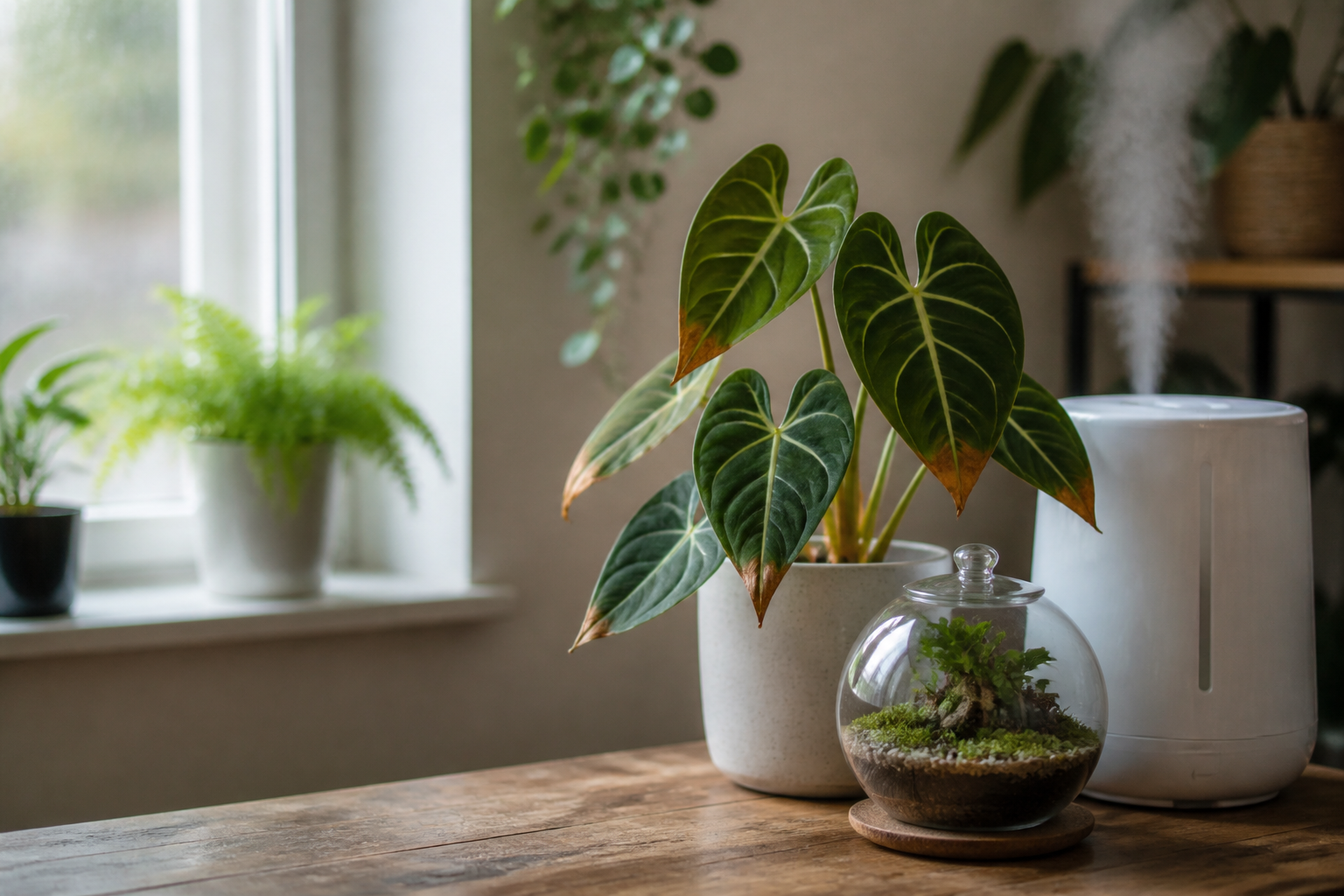
A basic hygrometer, which costs very little, tells you your actual humidity. Most common houseplants do fine around 40 to 50 percent. For the few that want more, a small humidifier is the most effective fix. We cover the methods that work, and the ones that do not, in our guide to raising humidity for houseplants.
Cause 2: Inconsistent watering
Swinging between bone dry and soaked stresses roots and leaves alike. Underwatering causes crisp tips and edges. Overwatering damages roots, which then cannot supply the leaves, and the tips brown as a result. Either way, the pattern to look for is brown tips alongside other signs of the watering problem.
The remedy is consistency. Check the soil before watering rather than using a fixed schedule, and water thoroughly when the plant is ready. A metal chopstick pushed to the bottom of the pot is a reliable way to check, and we prefer metal to wood because wood absorbs moisture and misreads later. Our guide to how often to water houseplants goes into this in detail.
Cause 3: Fertilizer salt buildup
Fertilizer is made of salts. If you feed too often or at too high a strength, salts accumulate in the soil, and they can burn roots and leaf tips. Telltale signs include a white or yellowish crust on the soil surface or around the drainage holes, along with brown tips.
To flush the soil, take the plant to a sink and run lukewarm water through the pot slowly for several minutes, letting it drain freely. Then let it drain fully and put it back. Hold off on fertilizer for a month or two, and when you resume, dilute it. See our guide to fertilizing houseplants.
Cause 4: Water quality
Tap water contains dissolved minerals, and many municipal supplies also have chlorine and fluoride. Most plants tolerate this fine. A few are sensitive, notably spider plants, dracaenas, calatheas, and prayer plants. Fluoride in particular is linked to brown tips on those species.
If you suspect water quality, try rainwater, distilled water, or filtered water for a couple of months and watch new growth. Letting tap water sit out overnight lets chlorine dissipate, but it does not remove fluoride or minerals. A standard pitcher filter may not remove fluoride either, so check what yours does.
Cause 5: Too much direct sun
Strong sun can scorch leaves, producing brown patches and tips, usually on the side facing the window. If browning is on one side and the plant sits in a sunny spot, move it back or add a sheer curtain.
Cause 6: Root problems and root-bound plants
If roots are rotting or crammed into too small a pot, they cannot supply the leaves properly, and tips brown. If you see roots at the drainage holes, or the soil dries within a day, consider repotting.
Should you trim brown tips?
Trimming is cosmetic, and it is fine to do. Use clean, sharp scissors and follow the natural shape of the leaf, leaving a very thin brown edge so you do not cut into healthy tissue and cause a new brown line. Do not remove too much at once. If a leaf is mostly brown, you can remove it entirely.
A quick way to narrow it down
- Look at which plants are affected. If only humidity-loving plants brown, think air.
- Check the soil. Very dry points to underwatering, constantly wet points to overwatering.
- Look for white crust. That suggests fertilizer salts.
- Consider your water. Sensitive species may react to fluoride and minerals.
- Consider the light. Browning on the sun-facing side suggests scorch.
Change one thing at a time and give it several weeks. New leaves that come in clean are the proof. If a plant keeps browning and you are stuck, our plant care service can take a look. Yellowing alongside browning is covered in why houseplant leaves turn yellow.
Frequently asked questions
Will brown leaf tips grow back green?
No. Brown tissue is dead and will not recover. If you fix the cause, new leaves will grow without brown tips. You can trim the brown parts for appearance.
Does misting prevent brown tips?
Not really. Misting raises humidity for only a few minutes. A humidifier or grouping plants works better, and wet leaves can encourage fungal spots in some plants.
Which plants are most prone to brown tips?
Calatheas, prayer plants, ferns, spider plants, and dracaenas are especially prone, because they are sensitive to dry air, minerals, or fluoride in water.
Is brown tip damage contagious to other plants?
No. Brown tips from environmental causes do not spread between plants. Pests or disease can, so check for those if browning comes with spots, webbing, or sticky residue.