How to Increase Humidity for Houseplants (What Works and What Doesn't)
4 min read
Many of our favorite houseplants come from tropical forests, where the air is damp and warm. Our homes, especially in winter with the heat on, are often far drier than those plants would choose. Dry air shows up as brown leaf tips, curling leaves, and pest problems. Before you try to fix it, it helps to know how much humidity you actually have, and which fixes are worth the effort.
First, measure it
A small digital hygrometer, which is inexpensive, shows your relative humidity. Most homes sit between 30 and 50 percent, and in winter with heating they can drop below 30 percent. Most common houseplants are happy at 40 to 50 percent. Only a handful, like calatheas, ferns, and some orchids, truly want more.
Do not panic about a low reading. Many plants, such as snake plants, ZZ plants, succulents, and pothos, tolerate dry air easily. Humidity is a bigger issue for thin-leaved, tropical species. If you are choosing plants for a dry home, see the best houseplants for beginners.
Signs your plant wants more humidity
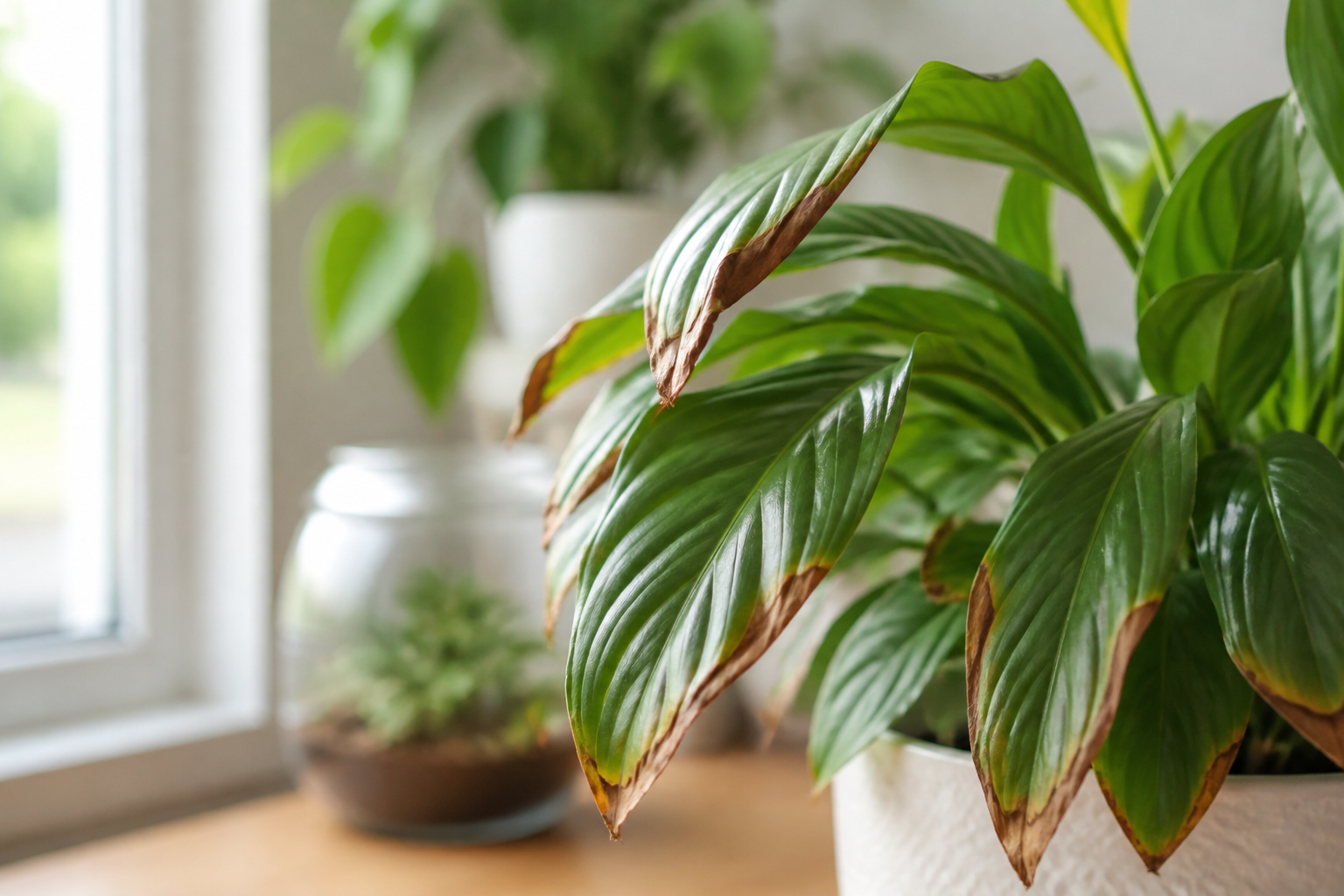
- Brown, crispy leaf tips and edges. See brown tips on houseplant leaves.
- Leaves that curl or roll inward
- New leaves that fail to unfurl properly
- Spider mites, which thrive in dry air. See how to get rid of spider mites.
These symptoms can have other causes, so check watering and light too.
What works
A humidifier
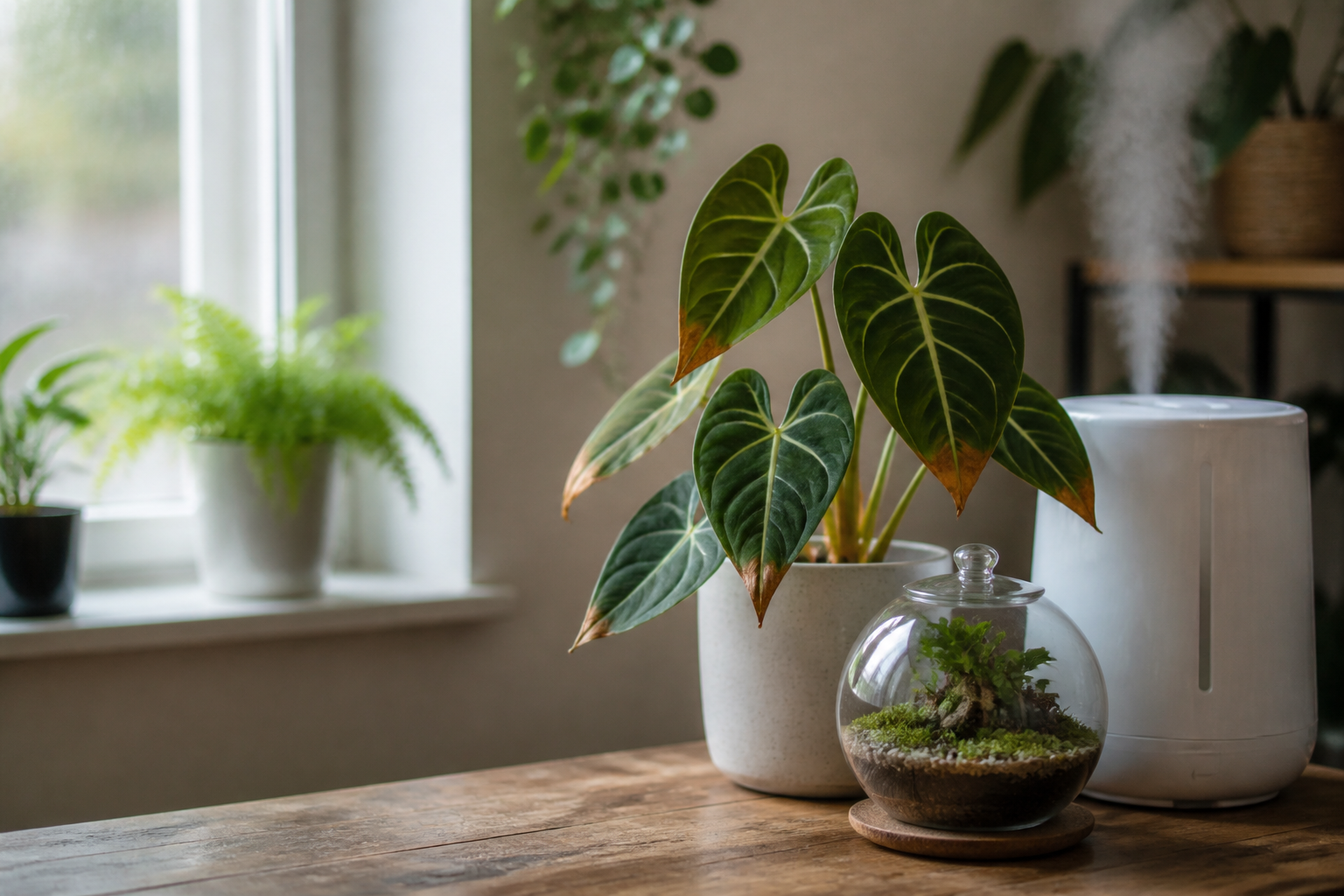
This is the most effective method, by a wide margin. A small cool mist humidifier running near your plants can raise the humidity of a room meaningfully. Place it a few feet from the plants so that leaves are not constantly wet, and clean it regularly according to the instructions to avoid mold and bacteria. A humidifier with a built-in humidistat helps you hold a target, such as 50 percent.
Grouping plants
Plants release moisture through their leaves, a process called transpiration. Placing several plants together creates a slightly more humid pocket of air around them. The effect is modest, but it is free, and it helps. Leave a little space for airflow so that pests and fungal problems do not spread.
Choosing the right room
Bathrooms and kitchens are naturally more humid. A bright bathroom with a window can suit ferns and other humidity lovers well. A bathroom with no light does not, however, whatever the humidity.
A closed or partly closed environment
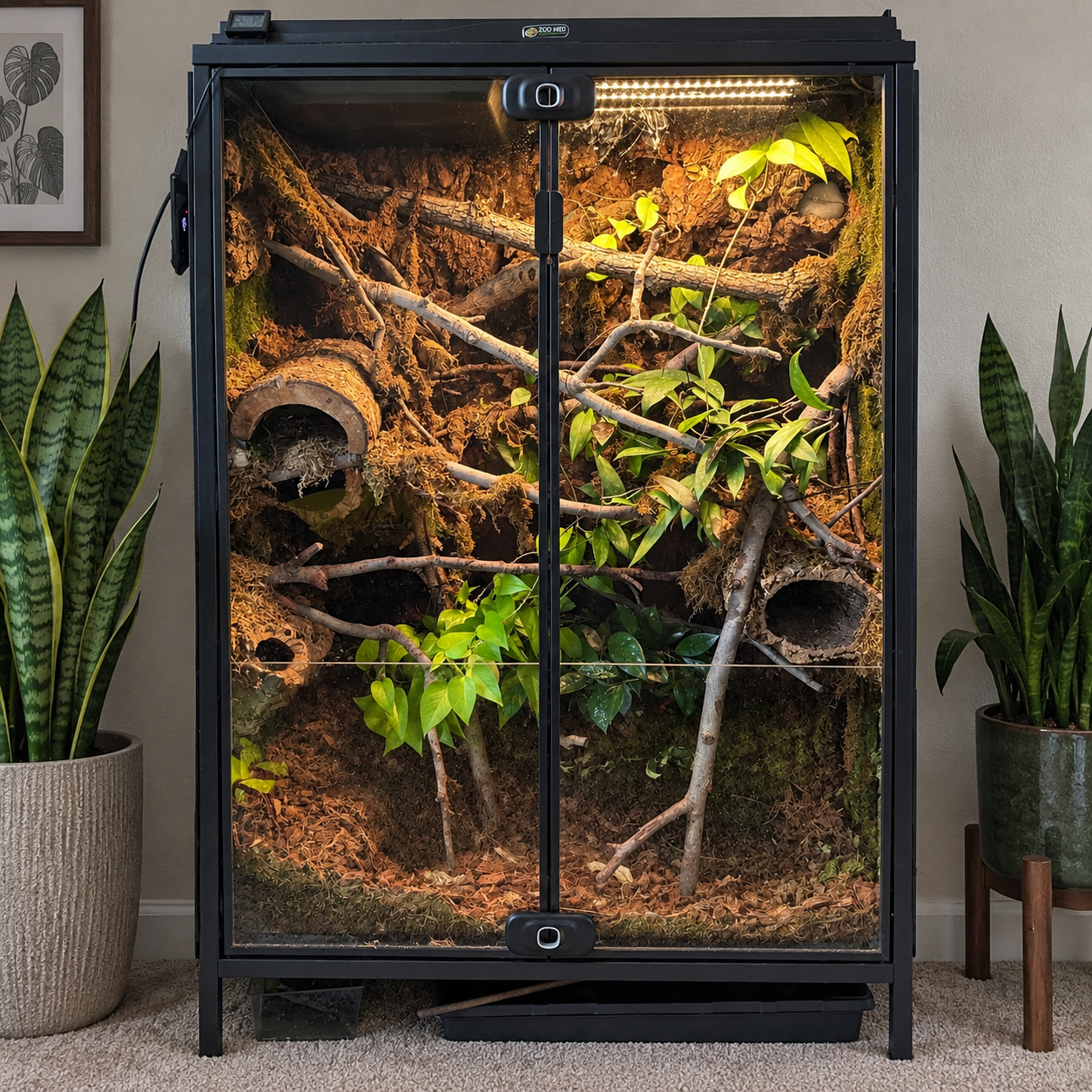
Enclosed containers hold humidity very well. A terrarium, a glass cabinet with plants, or a cloche can create a humid microclimate for small, delicate plants. If you like the idea of a closed ecosystem, see how to set up a bioactive terrarium.
Keeping plants away from heat sources
Heating vents, radiators, and fireplaces dry the air and the soil. Moving plants away from them helps more than almost any other tweak.
What barely helps
Misting
Misting is the classic fix, but the effect lasts only minutes. The humidity returns to the room level quickly. It does not meaningfully help plants, and frequent misting can encourage fungal spots on some plants. A light mist is harmless on most plants, but do not rely on it.
Pebble trays
A tray of pebbles filled with water, with the pot sitting on top of the pebbles, is a common recommendation. The added humidity is very small and local, only a few inches above the water. It is fine as a decorative option, but do not expect it to solve a dry room. Do not let the pot sit in the water, since that can cause root rot.
Placing a bowl of water nearby
Similar issue. The evaporation is too small to change a room's humidity much.
Practical tips
- Water consistently. Dry air makes soil dry faster, so check the soil often. A metal chopstick pushed to the bottom is a quick check. See our guide to watering.
- Wipe leaves to keep them clean and breathing.
- Do not overcorrect. Very high humidity in a room with poor airflow can lead to mold and fungal disease. Aim for a comfortable range, not a rainforest.
- Choose plants that suit your home. The easiest way to deal with dry air is to grow plants that tolerate it.
When to try each approach
For one or two fussy plants, a small humidifier or a closed case is the best choice. For a whole collection in winter, run a humidifier in the plant room. For a normal collection of tough plants, a hygrometer and a little attention may be all you need.
If you are not sure whether humidity is your plant's problem, our plant care service can help you work it out.
Frequently asked questions
What humidity level do houseplants need?
Most common houseplants do well at about 40 to 50 percent relative humidity. Tropical species like calatheas and ferns prefer more, while succulents and snake plants prefer drier air.
Does misting plants increase humidity?
Only for a few minutes. Misting is not an effective way to raise humidity, and wet leaves can encourage fungal problems on some plants.
Do pebble trays work?
They raise humidity only very slightly and very close to the tray. They are a minor help at best, so a humidifier is a better choice.
Is a humidifier safe for plants and pets?
Generally yes, if you keep it clean and place it where leaves are not constantly soaked. Follow the manufacturer's cleaning instructions to avoid mold.