How to Get Rid of Spider Mites on Houseplants
4 min read

Spider mites are among the most stubborn houseplant pests. They are tiny, hard to see, and they multiply quickly in warm, dry conditions. A small infestation can spread through your collection before you notice anything. The good news is that mites can be beaten with consistent treatment. The key is catching them early and repeating the treatment long enough to break their life cycle.

What spider mites are
Spider mites are not insects. They are tiny arachnids, related to spiders and ticks, and often less than a millimeter long. They feed by piercing leaf cells and sucking out the contents. They are red, brown, yellow, or pale, and often barely visible without a magnifier.
They thrive in warm, dry air, which makes indoor winter conditions ideal. A female can lay dozens of eggs, and under warm conditions a generation can mature in about one to two weeks, so populations explode quickly.
How to spot them
Look for the damage first.
- Stippling, tiny pale or yellow dots on the leaves, where cells have been drained
- Fine webbing, especially between leaves and stems, or at the tips
- Dull, dusty, or bronzed leaves
- Yellowing, curling, and dropping leaves in heavy infestations
- Tiny moving specks on the undersides of leaves
A simple test: hold a sheet of white paper under a leaf and tap the leaf. Tiny specks that move across the paper may be mites. A magnifying glass or phone camera zoom helps.
Mites often attack plants with thin leaves, such as palms, ivy, and many tropical foliage plants, and plants in dry conditions. Yellowing has many causes, so rule out others too. See why houseplant leaves turn yellow.
Step 1: Isolate the plant
As soon as you suspect mites, move the plant away from others. Mites spread by crawling, and by drifting on air currents. Check nearby plants closely.
Step 2: Rinse and wipe
Physical removal is the foundation of treatment.
- Take the plant to a sink or shower.
- Spray the whole plant, especially the undersides of leaves, with a firm but gentle stream of lukewarm water.
- Wipe leaves with a damp cloth where possible.
- Remove the worst damaged leaves and any with heavy webbing, and dispose of them in a sealed bag.
Do not skip this, since it removes many mites and eggs at once.
Step 3: Treat
After rinsing, treat with something that kills mites on contact.
- Insecticidal soap. A product labeled for houseplants, applied as directed to all leaf surfaces, especially the undersides. It kills on contact and has little residue.
- Neem oil or horticultural oil. These smother mites and disrupt feeding. Follow the label, and test on one leaf first, since some plants are sensitive. Avoid applying in strong sun.
- Rubbing alcohol solution. Some people wipe leaves with diluted rubbing alcohol on a cotton swab for spot treatment. Test on a small area first, because it can damage some leaves.
Always read the product label, and follow safety instructions. Keep treatments away from pets and children.
Step 4: Repeat
This is the step people skip. Treatments kill adults and nymphs, but eggs often survive. They hatch a few days later. Repeat the treatment every five to seven days for at least three to four weeks, and rinse between treatments. Keep going until you have seen no mites or new damage for a couple of weeks.
Step 5: Raise humidity
Mites love dry air, and they dislike humidity. Raising humidity makes the environment less comfortable for them. See how to increase humidity for houseplants. Regular rinsing of leaves also helps.
Step 6: Consider predatory mites
For large or recurring infestations, biological control can help. Predatory mites, such as Phytoseiulus persimilis, feed on spider mites. They are sold live and released onto the plants. They work best when you do not use harsh sprays alongside them. This is more common for plant collections or greenhouses, but it is an option.
If the plant is badly infested
For a heavily infested plant, severe pruning, or discarding the plant, may be better than risking spread. It is a tough decision, but a single plant is worth less than the health of your collection.
Preventing spider mites
- Inspect new plants carefully, and quarantine for a few weeks.
- Check the undersides of leaves regularly.
- Keep humidity reasonable, and avoid very hot, dry spots.
- Wipe or rinse leaves from time to time.
- Keep plants healthy, since stressed plants are more vulnerable.
- Do not crowd plants without airflow.
How to tell mites from other pests
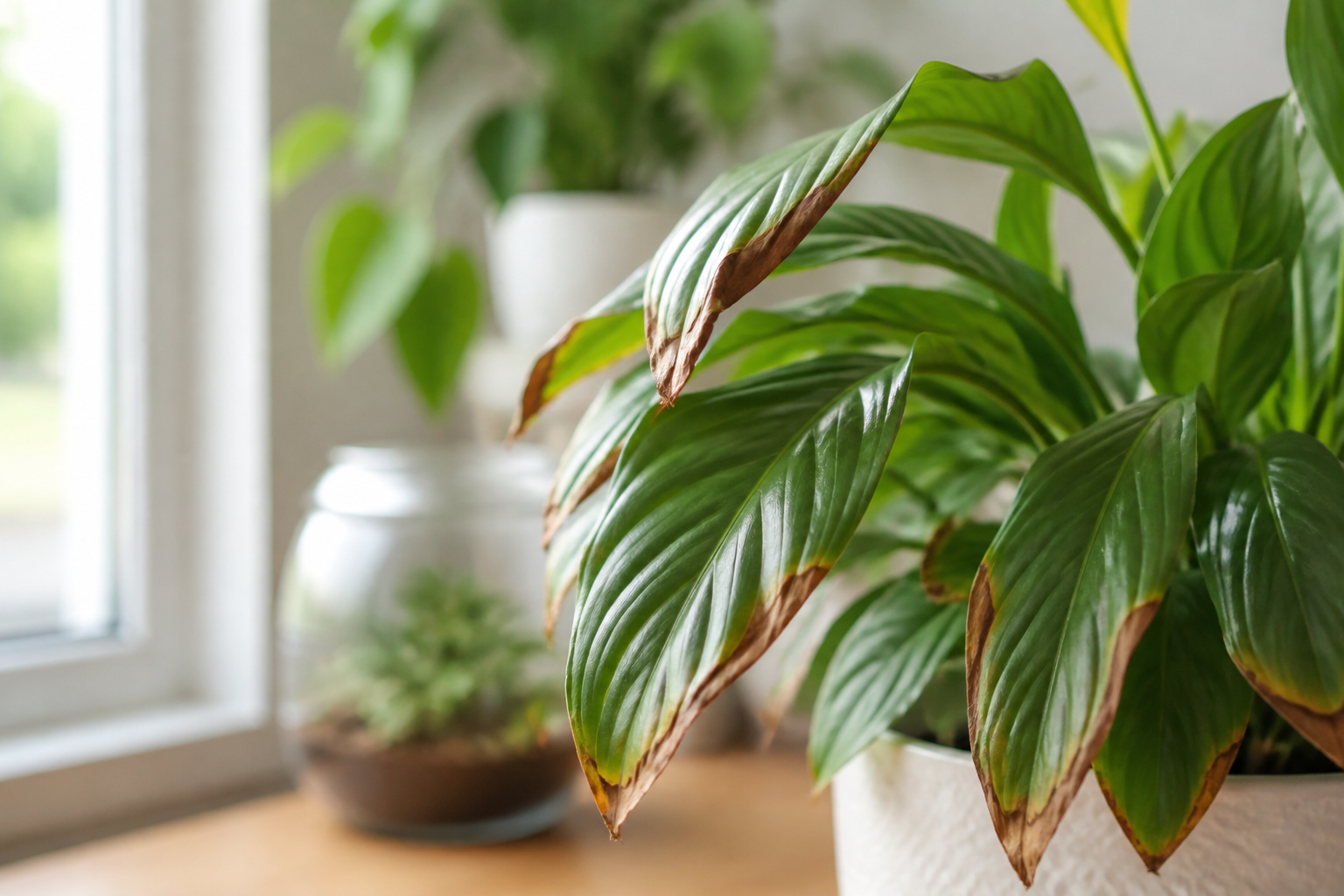
Fungus gnats are small flies near the soil, not on leaves. See how to get rid of fungus gnats. Browning tips can come from dry air or water quality. See brown tips on houseplant leaves. Mealybugs look like white cotton, and scale looks like small bumps. They need different treatment.
Mites can be frustrating, but persistence works. If an infestation keeps coming back, our plant care service can help.
Frequently asked questions
How do I know if my plant has spider mites?
Look for tiny pale dots on leaves, fine webbing, and dull or bronzed foliage. Tapping a leaf over white paper may reveal tiny moving specks.
Can spider mites be killed with water alone?
Rinsing removes many mites and eggs, but it rarely eliminates them alone. Combine rinsing with insecticidal soap or oil, and repeat for several weeks.
How long does it take to get rid of spider mites?
Usually three to four weeks of repeat treatment, because eggs hatch between treatments. Keep checking even after the plant looks clean.
Are spider mites harmful to people or pets?
No. They damage plants, but they do not bite or harm people or pets. The treatments you use should still be kept away from pets and children.