The Best Houseplants for Beginners
3 min read
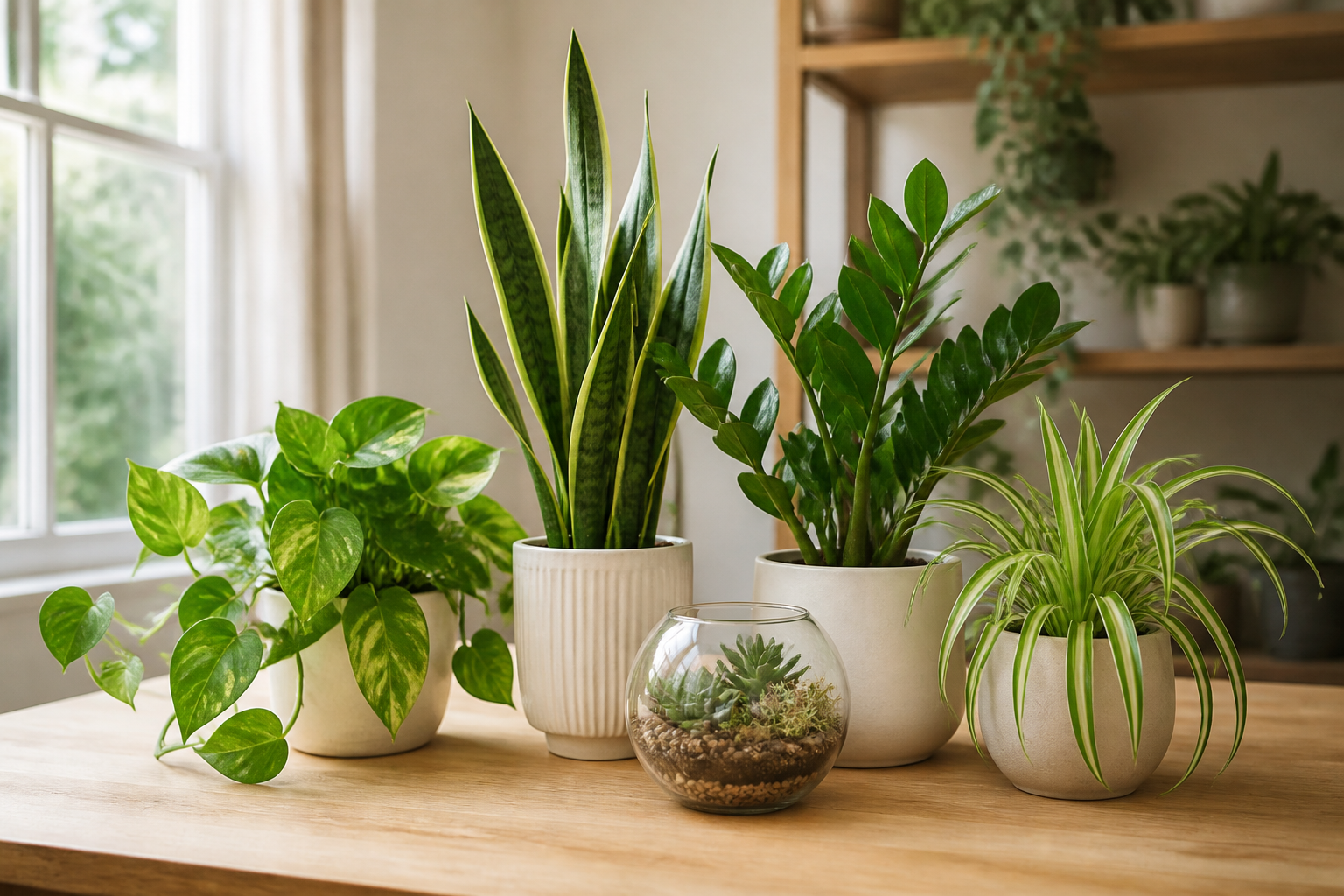
If you are just starting out with houseplants, the best thing you can do is choose plants that forgive mistakes. Some species shrug off missed waterings, uneven light, and dry air. Starting with them builds confidence, and you learn what plants need without losing a stack of them along the way. These are the plants we most often recommend, and why each is easy.
What makes a plant beginner friendly
A good first plant usually has several of these traits:
- It tolerates missing a watering, or a few.
- It copes with average indoor light, not perfect light.
- It handles typical indoor humidity.
- It rarely gets pests.
- It shows clear signs when something is wrong, so you can learn.
- It is widely available and affordable.
Pothos (Epipremnum aureum)
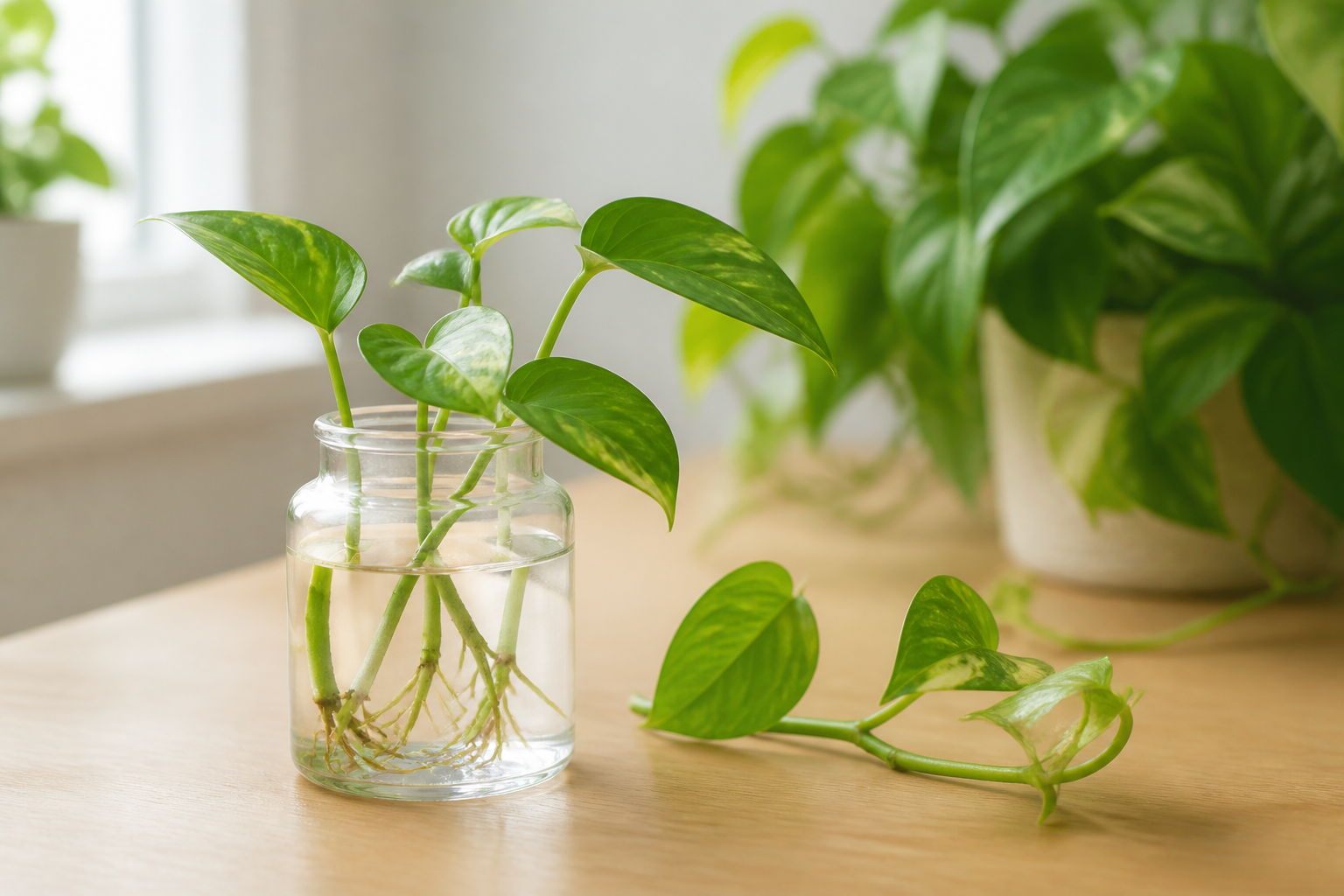
The classic beginner plant. Pothos trails or climbs, grows quickly, and tolerates a wide range of light, from fairly dim to bright indirect. It droops when thirsty and recovers quickly after watering, which teaches you its rhythm. It is also very easy to multiply, since cuttings root readily in water. See how to propagate pothos in water. Note that it can be harmful to pets if chewed.
Snake plant (Dracaena trifasciata)
Upright, sculptural, and nearly indestructible. Snake plants store water in their leaves and prefer to dry out between waterings, which suits busy people. They tolerate low light and bright light alike, though they grow faster with more light. Their main weakness is overwatering, so err on the side of too little.
ZZ plant (Zamioculcas zamiifolia)
Glossy, dark green, and tough. Thick rhizomes store water, so it can handle weeks without a drink. It tolerates low light, though it grows slowly there. Like the snake plant, it dislikes being kept wet.
Spider plant (Chlorophytum comosum)
Arching, striped leaves and little plantlets that dangle from the parent, which you can pot up for more plants. It is easy to grow and is generally regarded as safe for cats and dogs. It can develop brown tips from fluoride or minerals in tap water, so use filtered or rainwater if that bothers you. See brown tips on houseplant leaves.

Heartleaf philodendron (Philodendron hederaceum)
Similar in habit to pothos, with soft, heart-shaped leaves. It adapts to average light and is simple to care for. If you cannot tell it from pothos, see our comparison of pothos versus philodendron.
Chinese evergreen (Aglaonema)
Handsome foliage in greens, silvers, and pinks. It tolerates lower light and average humidity. The more colorful varieties want more light than the plain green ones.
Cast iron plant (Aspidistra elatior)
True to its name, it tolerates shade, irregular watering, and cooler rooms. It grows slowly, so it rewards patience, not attention.
Jade plant (Crassula ovata)
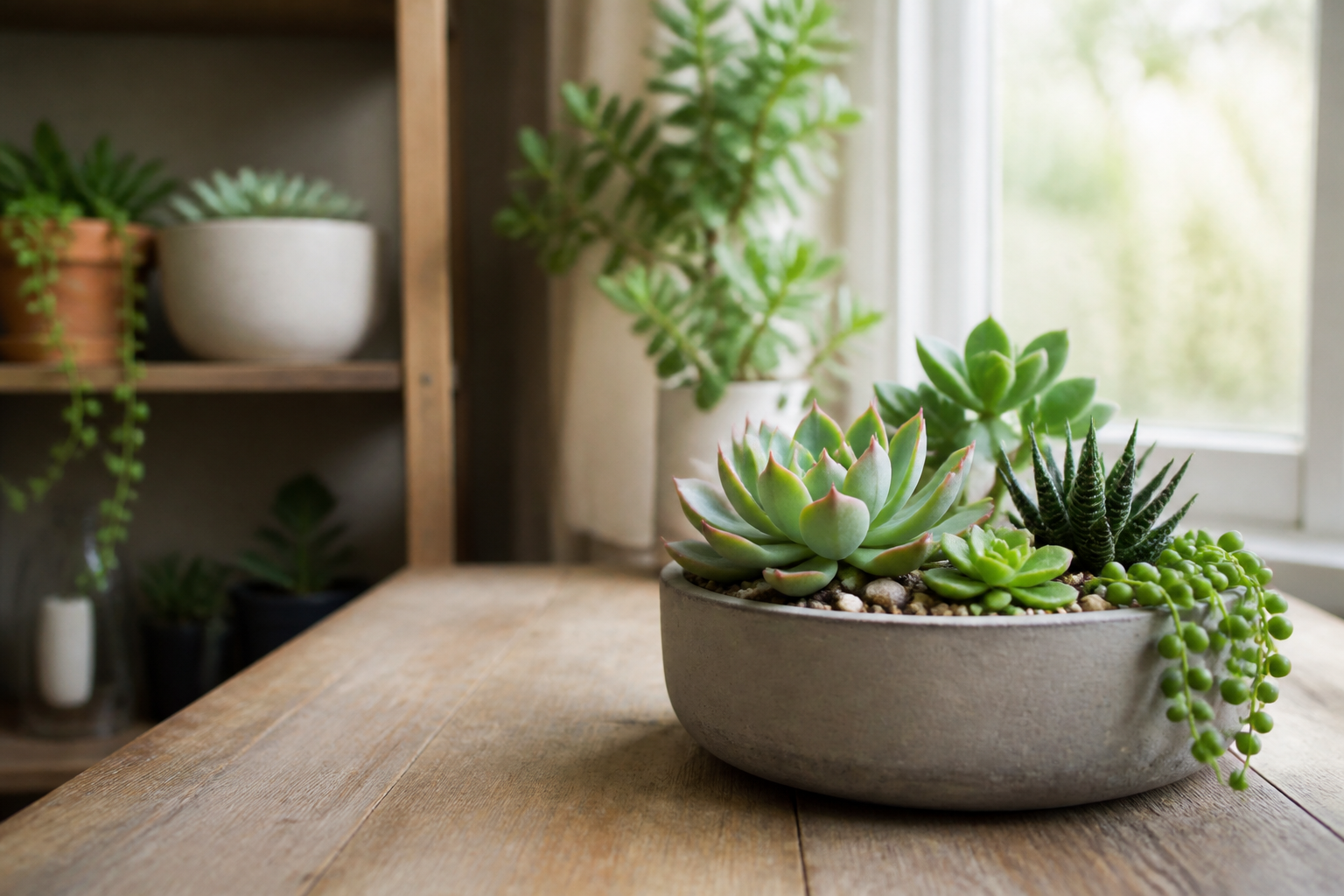
A good first succulent. It wants bright light, ideally a sunny window, and a gritty, fast-draining soil. Water thoroughly, then let it dry. If you are drawn to succulents, read how to care for succulents indoors first, since they need more light than most beginners expect.
How to set yourself up for success
Plant choice is half the story. These habits do the rest.
- Use pots with drainage holes. It is the single easiest way to avoid root rot.
- Check the soil before watering. Push a finger in, or use a metal chopstick, and water only when the soil is dry to the right depth. Do not follow a calendar. Our guide to how often to water houseplants explains how.
- Match the plant to the light. Put sun lovers in bright spots and shade tolerant plants in dimmer ones. See low light houseplants.
- Do not overdo it. Most beginner plant problems are caused by too much love: too much water, too much fertilizer, and too many moves.
- Give new plants time. Plants often drop a leaf or two after a move. Keep conditions steady and they usually settle in.
A good starter trio
If you want a simple place to begin, try one trailing plant, one upright plant, and one that is easy to share. A pothos, a snake plant, and a spider plant give you three different shapes, three different watering habits, and very forgiving care. After a few months you will know your light and your own habits much better, and you can branch out.
If you want advice matching plants to your home, our plant care service can help.
Frequently asked questions
What is the easiest houseplant to keep alive?
Snake plants, ZZ plants, and pothos are among the easiest. They tolerate irregular watering and a range of light levels.
How often should a beginner water houseplants?
There is no fixed schedule. Check the soil before watering, and water only when it is dry to the depth that suits the plant. Overwatering is the most common beginner mistake.
Are beginner houseplants safe for cats and dogs?
Some are, such as spider plants, but others like pothos, philodendron, ZZ plants, and snake plants can cause problems if chewed. Check reliable pet safety information before choosing.
Do I need a grow light for beginner plants?
Not for most of the plants listed here. They tolerate average indoor light. A grow light helps if your home is very dim or if you want to grow succulents.