How to Care for Succulents Indoors
4 min read
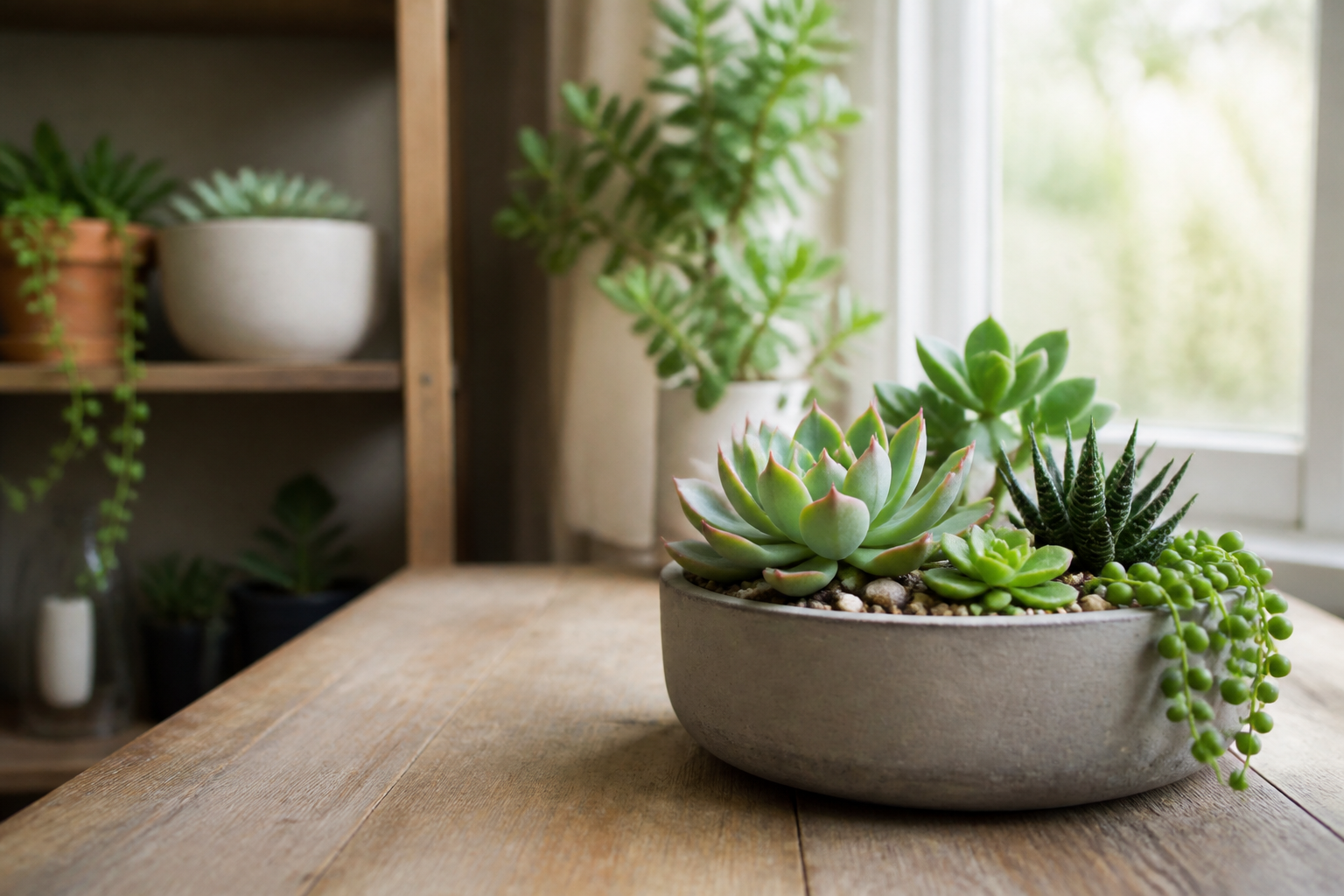
Succulents have a reputation as plants you can ignore. That is only partly true. They tolerate neglect, but indoors they are often loved to death through too little light or too much water. Once you understand what they evolved to do, caring for them is simple. This guide covers the essentials of light, soil, watering, and troubleshooting for indoor succulents and cacti.
What succulents want
Succulents store water in thick leaves or stems, which lets them survive dry spells in sunny, open habitats. That tells you what they want: lots of light, soil that drains quickly, and water given generously but only when the soil has dried out. Most of the problems people have come from forgetting one of these three things.

Light: the most important factor
Light is where indoor succulents most often struggle. Most need several hours of bright light every day, and the more the better. A south or west facing window is ideal, and an unobstructed east window can also work. Many windows are not bright enough, especially in winter.
Signs of too little light include:
- Stretching, with a long, bare stem and widely spaced leaves, called etiolation
- Pale or washed-out color
- Leaves that point downward or lean toward the window
- Slow or no growth
If you see these signs, move the plant to a brighter spot or add a grow light. See how to fix a leggy houseplant and what bright indirect light means for help judging light. A full-spectrum grow light, placed a few inches to a foot above the plant and run for ten to twelve hours a day, can keep succulents compact indoors.
Be careful when moving succulents from low light to strong direct sun. They can sunburn, showing as brown or white patches. Increase exposure gradually over a couple of weeks.

Soil
Succulents need a gritty, fast-draining mix. Regular potting soil holds too much moisture, and it invites root rot. A cactus and succulent mix works well, and you can improve it by adding perlite or pumice, roughly one part grit to one or two parts mix. The goal is soil that dries out within a few days of watering.
Pots
Always use a pot with drainage holes. Unglazed terracotta is a good choice because it breathes and dries quickly. If you use a decorative pot without holes, keep the succulent in a nursery pot inside it and empty any water that collects. See how to repot a houseplant for how to move a plant to a new pot. Succulents often prefer a snug pot, so go up only a size at a time.
Watering
The rule for succulents is to soak and dry. Water thoroughly until it runs from the drainage holes, then wait until the soil is completely dry before watering again. A metal chopstick pushed to the bottom of the pot will tell you whether the soil is dry throughout. We recommend metal since wood absorbs moisture and gives misleading readings. See how often to water houseplants.
How often depends on light, pot, and season. In a bright room in summer, that may be every one to three weeks. In winter, many succulents rest and need much less, sometimes only once a month or less.
Signs of overwatering include soft, translucent, or mushy leaves, black or brown stems, and leaves that drop easily. Signs of underwatering include wrinkled, shriveled leaves. Wrinkled leaves plump up after a good drink, while mushy leaves do not recover.
Temperature and air
Most succulents like normal room temperatures and do well with a cooler winter. Good airflow helps soil dry. Avoid cold drafts and keep succulents away from heating vents. They do not need extra humidity, and in fact prefer dry air.
Feeding
Succulents need little fertilizer. A diluted balanced fertilizer, applied once or twice during the growing season in spring and summer, is plenty. Skip feeding in winter.
Common problems
- Stretching. More light.
- Rot. Reduce watering, improve drainage, and if needed, cut away rotted tissue, let the plant callus, and re-root.
- Mealybugs. White, cottony clusters in crevices. Dab with a cotton swab dipped in rubbing alcohol, and repeat until gone.
- Sunburn. Move to a less intense spot and acclimate slowly.
- Shriveled leaves. Water more deeply, but not more often.
Propagating succulents
Many succulents propagate easily from leaves or stem cuttings. Let the cut end dry and callus for a few days, then lay it on or place it in dry, gritty soil. Wait for roots before watering lightly. It is a cheap way to get more plants.
A note on cacti
Cacti follow the same basic rules as other succulents, with even more emphasis on light and fast drainage. They also need a dry winter rest in many cases.
For a plant that suits beginners, jade is a good start, and our guide to the best houseplants for beginners lists others. If your succulents are struggling and you want a second opinion, our plant care service can help.
Frequently asked questions
How often should I water indoor succulents?
Water thoroughly when the soil is completely dry, which may be every one to three weeks in summer and much less in winter. Check the soil, and do not follow a fixed calendar.
Why is my succulent stretching?
It is not getting enough light. Move it to a brighter window or add a grow light. The stretched growth will not shorten, but new growth will be compact.
Do succulents need direct sunlight?
Most want several hours of bright light daily, and many appreciate some direct sun. Introduce direct sun gradually to avoid sunburn.
Can I use regular potting soil for succulents?
It is not ideal, because it holds too much water. Use a cactus mix, or add perlite or pumice to regular mix to improve drainage.