What Is Bright Indirect Light? A Simple Guide for Houseplants
4 min read
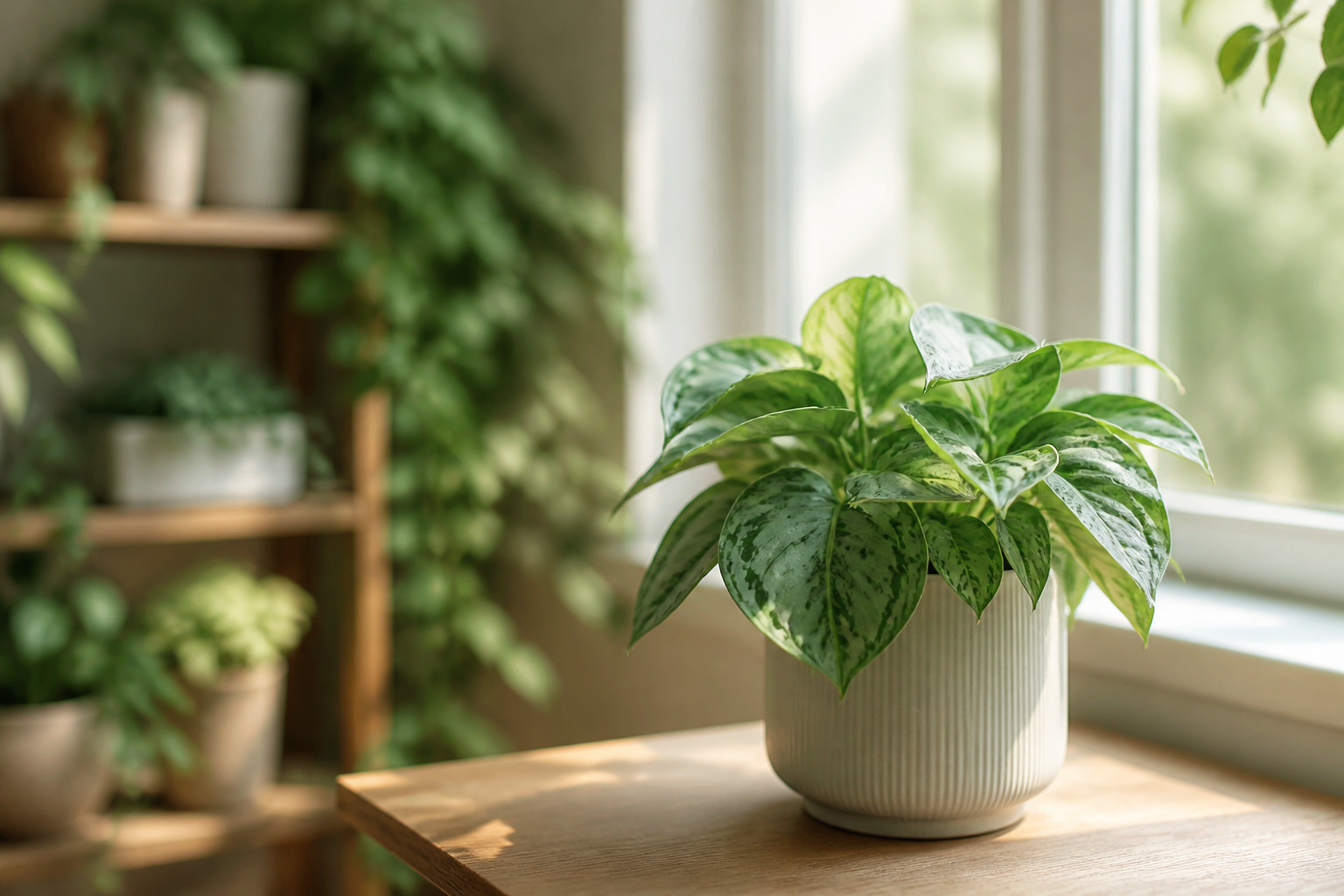
Nearly every plant tag says "bright, indirect light," and almost nobody explains what that means. It is the most common phrase in houseplant care and one of the most confusing. The idea is simple once you break it down: lots of light, but not hitting the leaves directly. Here is how to understand it, measure it, and use it to place your plants.
What "bright" and "indirect" mean
Bright means a high level of light, enough that the room feels well lit during the day and you could comfortably read without a lamp.
Indirect means the sun's rays are not hitting the leaves directly. The light is diffused, bounced, or filtered, for example by a sheer curtain, by a wall, or by a distance from the window. Direct light can scorch the leaves of many plants, particularly those from shaded forest floors.
So bright indirect light is a strong, soft light, the kind you get near a sunny window without the sun landing on the plant.
The shadow test
You can estimate light without any equipment. Hold your hand about a foot above where the plant sits, in the middle of the day, and look at the shadow it casts on the surface.
- A sharp, dark, clear shadow means strong, direct or very bright light.
- A soft, blurry shadow with defined edges means bright indirect light.
- A faint, fuzzy shadow means medium light.
- Barely any shadow means low light.
It is a rough guide, but surprisingly useful.
Light levels at a glance
Horticulturists sometimes measure light in foot-candles. The figures below are approximate, and they vary by source, but they give a feel.
- Low light: roughly 50 to 250 foot-candles. A dim room, or a spot far from a window.
- Medium light: roughly 250 to 1,000. A few feet from a bright window.
- Bright indirect light: roughly 1,000 to 2,500 or more. Close to a bright window, with filtered sun.
- Direct sun: several thousand and up. Sun falling directly on the plant.
A light meter app on a phone can give a rough estimate, though phone sensors are not very accurate. A dedicated light meter is better if you want numbers. Many people simply use the shadow test and watch the plant.
Window direction
In the Northern Hemisphere, window direction changes the light:
- South-facing. The brightest and sunniest. Direct sun for much of the day. Plants a few feet back, or behind a sheer curtain, get bright indirect light. Succulents can sit right in the window.
- East-facing. Gentle morning sun, then bright indirect light. A good, safe spot for many plants.
- West-facing. Strong afternoon sun, which can be hot. Bright, with a risk of scorching in summer.
- North-facing. The dimmest, with no direct sun. Suits low light plants. See low light houseplants.
In the Southern Hemisphere, north and south are reversed.
Things that change your light
- Distance from the window. Light drops off quickly. A plant three feet from a window gets much less light than one on the sill.
- Season. Winter days are shorter and the sun is lower, so the same spot gets less light than in summer.
- Obstructions. Trees, buildings, blinds, and curtains all reduce light.
- Glass and screens. Dirty windows and screens cut light. Cleaning them helps.
- Wall color. Light-colored walls reflect more light.
How to give plants bright indirect light
- Put the plant near a window, but not in the path of the strongest sun.
- Use a sheer curtain to soften direct sun.
- Move plants back from south and west windows in summer.
- Rotate pots every week or two.
- Clean leaves and windows.
- Use a grow light if needed.
What plants show you
Plants tell you whether they are happy.
- Too little light: stretching, pale or small new leaves, slow growth, and dropping lower leaves. See how to fix a leggy houseplant.
- Too much light: bleached, scorched, or brown patches, curling leaves, and crispy edges.
Make changes gradually. Moving a plant from a dim spot into strong sun suddenly can burn it.
Grow lights
If your home lacks natural light, grow lights help. A full-spectrum LED, placed a foot or two above the plant and run for eight to twelve hours on a timer, can supply bright light. This is especially useful for succulents. See how to care for succulents indoors.
Choosing plants for your light
The easiest approach is to match plants to the light you have. Our list of the best houseplants for beginners includes many that adapt to a range of light. If you want help working out where plants should go in your home, our plant care service can help.
Frequently asked questions
Can bright indirect light be near a south-facing window?
Yes. A few feet back from a south window, or behind a sheer curtain, you get bright indirect light. Right in the window, the light is often direct.
Is bright indirect light the same as full sun?
No. Full sun means direct rays on the plant for many hours. Bright indirect light is strong but diffused, without the sun landing on the leaves.
How do I know if my plant is getting enough light?
Look at the growth. Compact, steady growth with healthy color is a good sign. Stretching and pale leaves suggest too little light, while scorched patches suggest too much.
Can I use a phone app to measure light?
It gives a rough idea, but phone sensors are not very accurate. The shadow test and watching the plant are often just as useful.