Pothos vs Philodendron: How to Tell Them Apart
Curated by ColetivateUpdated 4 min read
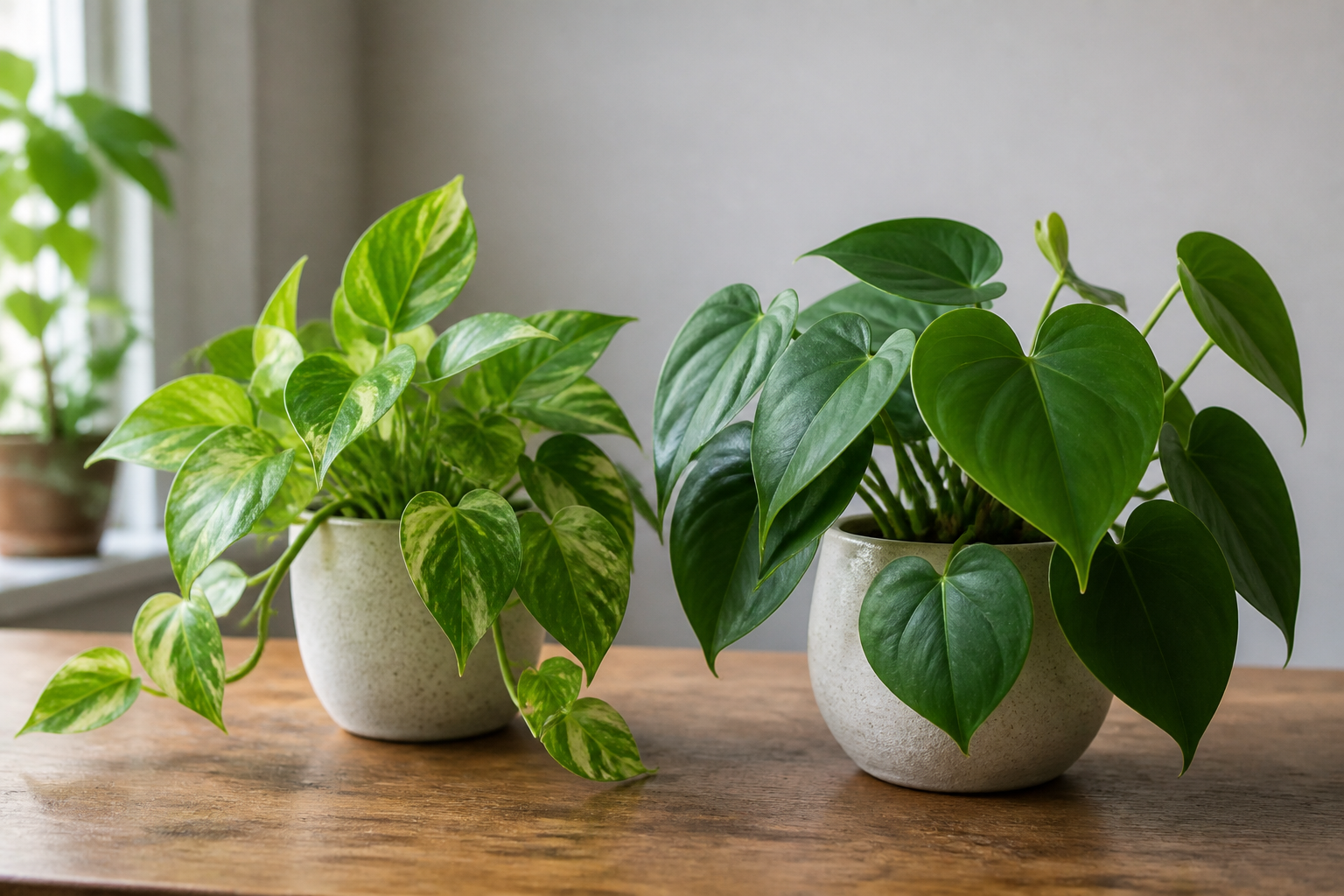
Feel the leaf: pothos leaves are thick, firm, and waxy, while philodendron leaves are thinner, softer, and more matte 1. Pothos also produces no cataphyll, the sheath around a new leaf; its new leaf simply unrolls from the base of the previous one 2. Pothos does best when soil dries between waterings 3, while philodendron prefers soil kept evenly moist 2.
Pothos and philodendron are two of the most popular trailing houseplants, and they are constantly mistaken for each other. Both have heart-shaped leaves, both trail or climb, and both are easy. They are different plants, though, from different genera, and once you know what to look for, the difference is easy to see. Here is how to tell them apart, and whether it matters for care.
The short version
- Pothos (Epipremnum aureum) has thicker, waxier leaves, often with yellow or white variegation, and a slightly uneven, less perfectly shaped heart.
- Heartleaf philodendron (Philodendron hederaceum) has thinner, softer, velvety or satin leaves, a more symmetrical heart shape, and usually solid green leaves, though some varieties are variegated or colored.
Both belong to the arum family, so they are relatives, but not the same plant.

Leaf texture and shape
Feel the leaf. Pothos leaves are thick, firm, and waxy, almost leathery. Philodendron leaves are thinner, softer, and more matte or satiny. 1 Pothos leaves tend to be a little lopsided, with a slightly wavy surface, especially on mature plants. Philodendron leaves are usually a cleaner, more symmetrical heart shape, with a clear point at the tip. Another clue is the leaf stem: on a pothos it is grooved, while on a philodendron it is smooth. 1

The new leaf test
This is the most reliable test. Look at how a new leaf emerges.
A philodendron produces a small, thin, papery sheath called a cataphyll, which protects each new leaf. The new leaf pushes out of this sheath, and the sheath then dries up and falls off. If you see these brown, papery leftovers on the stem, it is a philodendron.
A pothos does not produce a cataphyll. 2 Its new leaf simply unrolls from the base of the previous leaf, with no sheath.
Stems and aerial roots
Pothos stems are thicker and more rigid, often with a slightly bumpy or ridged look. Aerial roots on a pothos are thick and chunky. Philodendron stems are thinner and smoother and more flexible, and the aerial roots are thinner and fine.
Growth habit
Both trail. Pothos tends to grow more quickly and more robustly, and it can get very large leaves if it is given a pole to climb. Philodendron tends to be a bit more delicate and compact. Neither is difficult to grow.
Variegation
Pothos comes in many popular variegated types, including golden, marble queen with creamy white marbling, neon with bright chartreuse leaves, and others. Heartleaf philodendron is usually plain green, and there are also types with colored or variegated foliage, such as lemon lime and brandi. Variegated plants need brighter light to keep their patterns.
Care: are they different?
Their care is very similar, which is one reason people mix them up.
- Light. Both do best in bright, indirect light and tolerate lower light. 1 In dim spots, they grow slowly, and variegated pothos can lose its patterns. See low light houseplants.
- Water. Pothos does best when the soil dries between waterings. 3 Philodendron prefers soil that stays evenly moist but never soggy. 2 Check with a finger or a metal chopstick. Philodendron leaves are thinner and tend to show thirst a bit earlier, and pothos is a little more drought tolerant. See how often to water houseplants.
- Humidity. Average indoor humidity is fine for both.
- Soil. A well-draining indoor potting mix.
- Feeding. A balanced fertilizer in spring and summer.
- Pet safety. Both contain calcium oxalate crystals and can irritate the mouth and stomach of cats, dogs, and people if chewed. 2 Keep them out of reach of pets.
Propagation
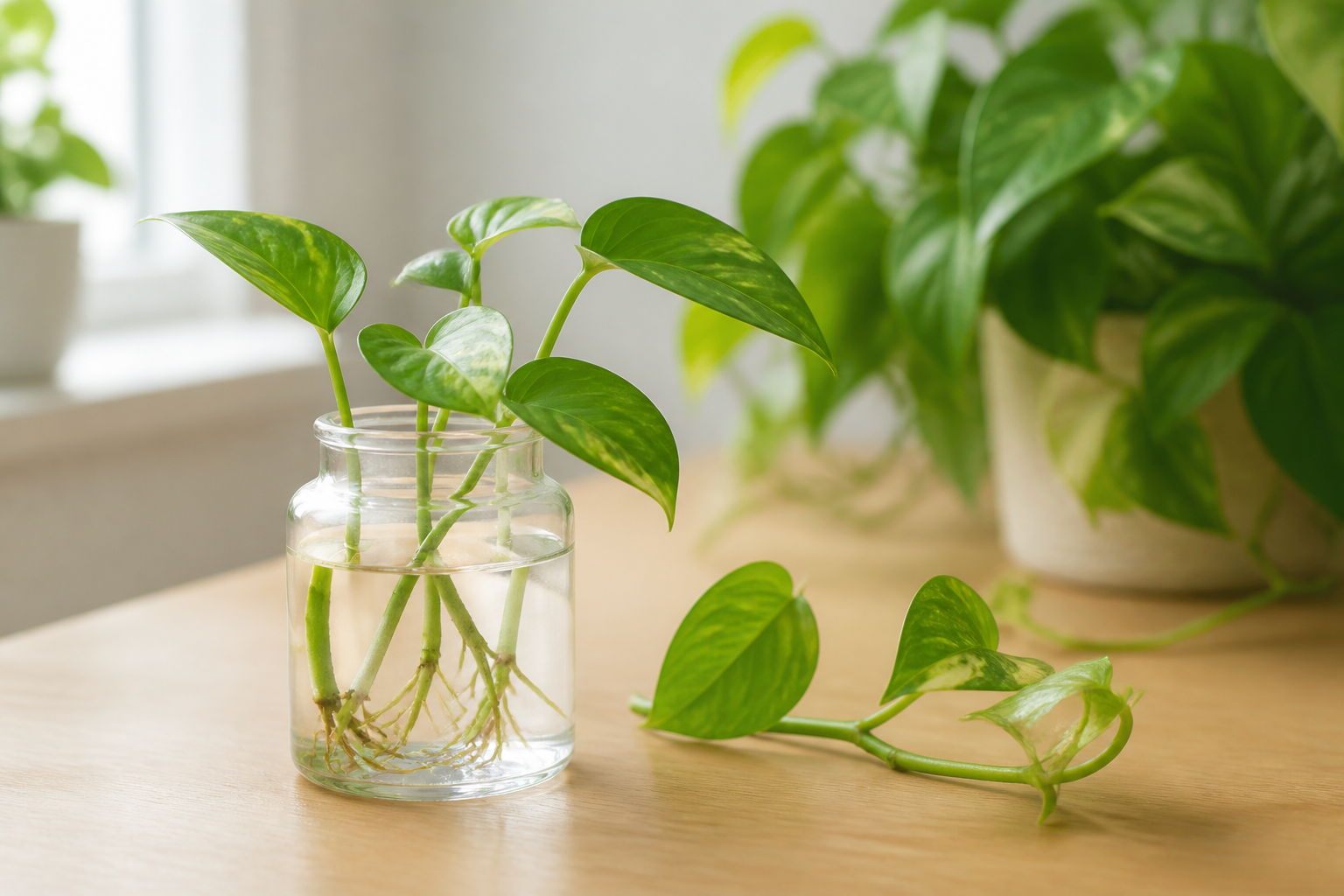
Both are easy to propagate from stem cuttings with a node. 1 Cut just below a node, with at least one leaf, and place it in water or moist soil. See how to propagate pothos in water, which works for philodendron too.
Does it matter which you have?
For daily care, not much. If you want to buy a specific plant, or are curious about identification, it is worth knowing. If you are looking for forgiving first plants, both belong on the list in our guide to the best houseplants for beginners. If you are unsure which one you have, or want help working out a plant's identity or needs, our plant care service can help.
Sources
Frequently asked questions
What is the easiest way to tell pothos from philodendron?
Look at the new growth. Philodendron produces a small papery sheath that dries and falls off as each leaf emerges. Pothos has no sheath.
Is pothos or philodendron easier to care for?
Both are easy. Pothos is slightly more tolerant of drought and low light, while philodendron is a little more delicate. Either one is a good beginner plant.
Are pothos and philodendron toxic to pets?
Both contain calcium oxalate crystals, which can irritate the mouth and stomach if chewed. Keep them away from pets and children.
Can pothos and philodendron be planted together?
Yes. They have very similar light and water needs, so they can share a pot, as long as you give them room.