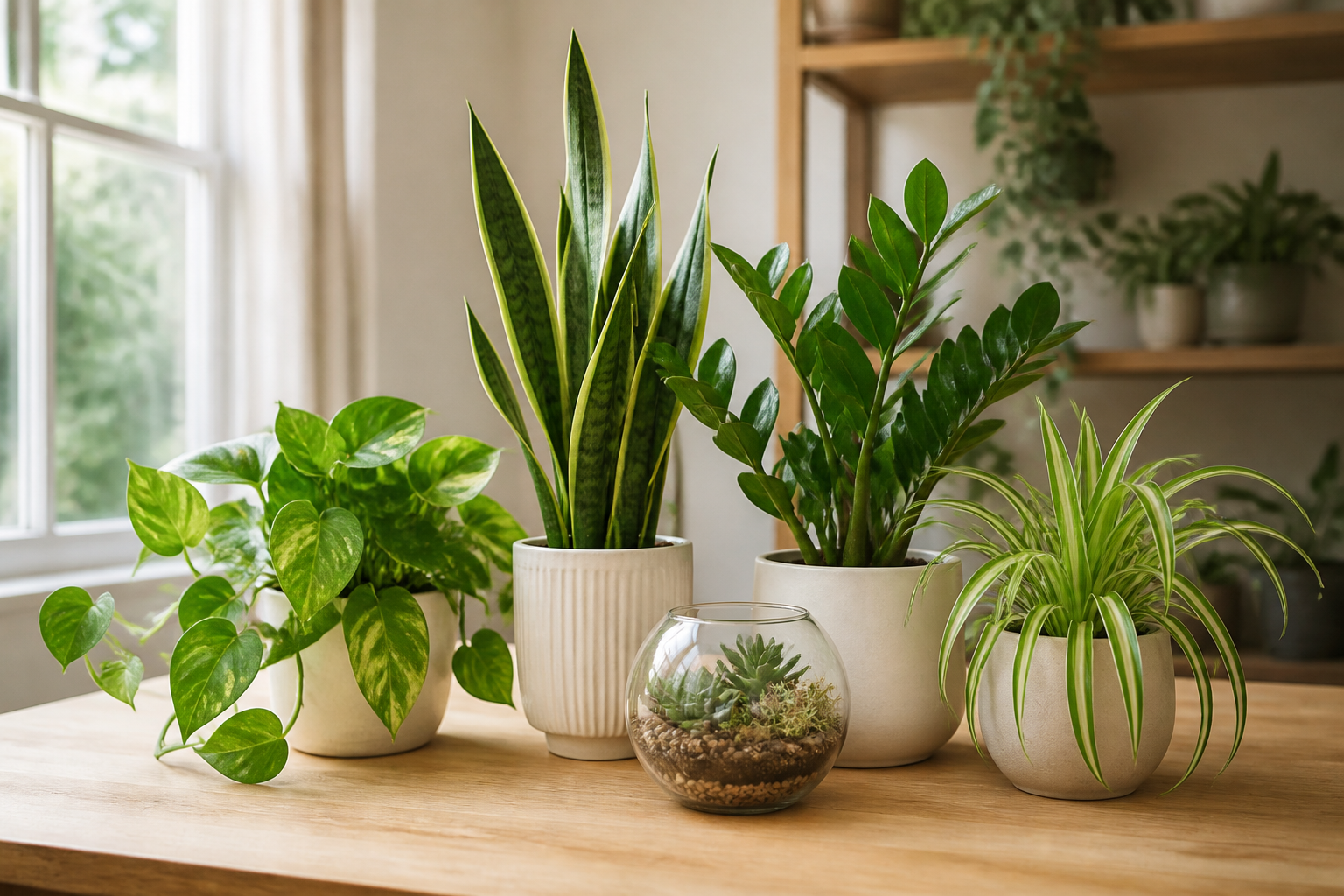
How to Propagate Pothos in Water
4 min read
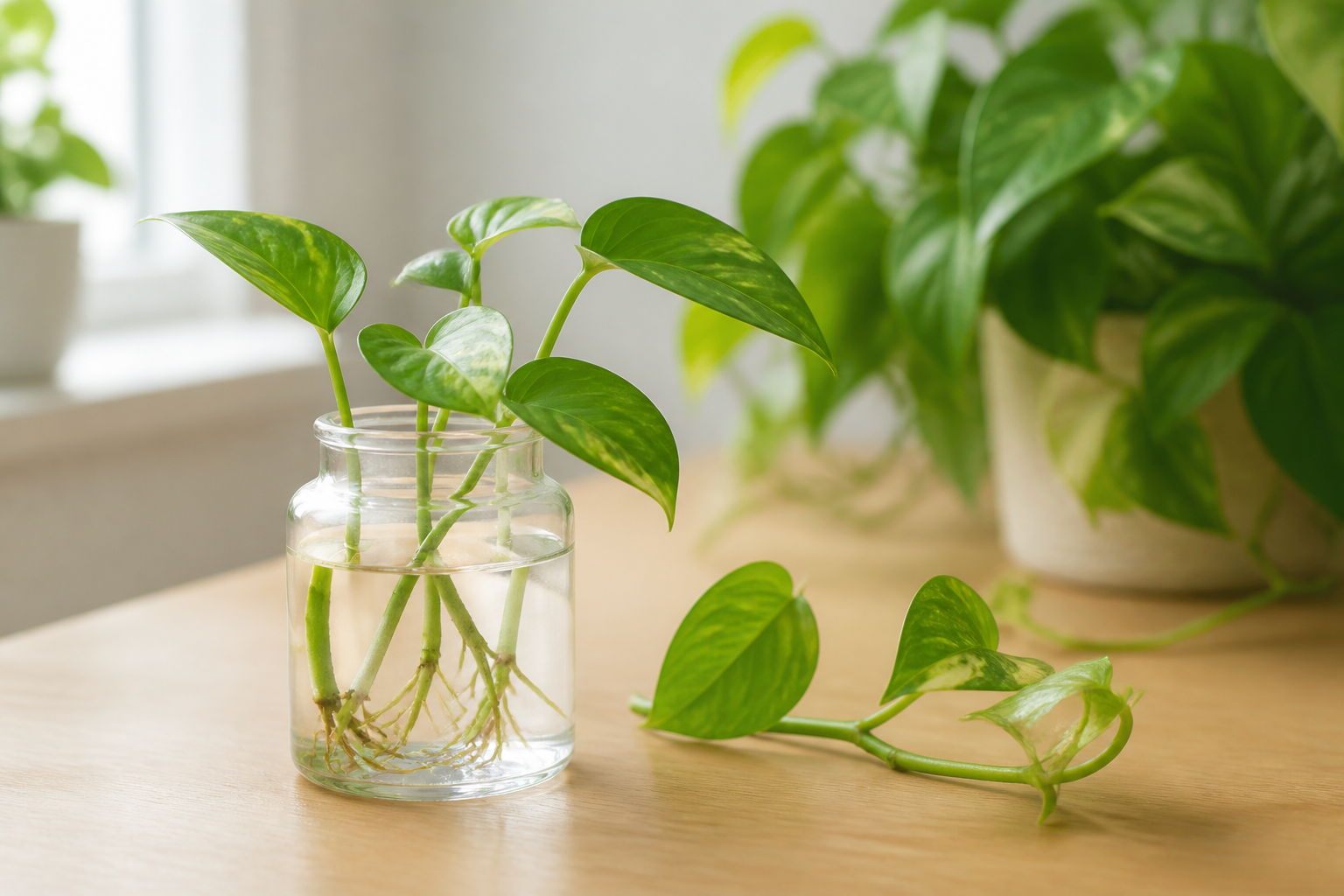
Pothos may be the easiest plant in the world to multiply. A cutting in a jar of water will usually grow roots within a couple of weeks, with almost no effort from you. It is a satisfying way to make more plants, share them with friends, or fill out a thin, leggy vine. Here is how to do it well, and how to avoid the common mistakes.

What you need
- A healthy, mature pothos
- Clean, sharp scissors or pruners
- A clear glass jar or vase
- Room temperature water
- Bright, indirect light
Find the nodes
Roots grow from nodes. A node is a small bump on the stem where a leaf joins it, often with a tiny brown aerial root nub beside it. A cutting without a node will not root, however long you wait.
Take the cutting
- Choose a healthy vine. Look for stems with several leaves and clear nodes.
- Cut about a quarter inch below a node. Use clean scissors. A cutting with two to four leaves and at least two nodes gives you the best results.
- Remove the lowest leaf, if needed, so that the node is bare and can sit under water. Do not let leaves sit in the water, since they will rot.
Taking cuttings also helps the parent plant. Pruning above a node encourages the stem to branch and fill out. If your plant is stretched out, see how to fix a leggy houseplant.
Put the cutting in water
- Fill a clean jar with room temperature water. Tap water is fine, though if yours is heavily treated, letting it sit overnight is a good habit.
- Place the cutting so that the node or nodes are submerged and the leaves are above the water.
- Put the jar in bright, indirect light. Direct sun can warm the water and scorch leaves.
Care while it roots
- Change the water about once a week, or sooner if it becomes cloudy or smells. Fresh water has more oxygen, and it prevents bacteria from rotting the stem.
- Top up the level as it drops.
- Be patient. Roots usually start to appear within one to three weeks, though in cool or dim conditions it can take longer.
- Watch for rot. A stem that turns soft, brown, or slimy needs to be trimmed back to healthy tissue and started again.
How long should you wait before potting?
You can pot up cuttings once the roots are a few inches long, and have started to branch. Roots that are only an inch long can work, but longer, more developed roots are more reliable. Plants rooted in water can struggle if left for months, because water roots are somewhat different from soil roots and can have trouble adapting. Do not wait too long.
Potting up
- Fill a small pot, with drainage holes, with a well-draining indoor potting mix. A pot that is three to four inches wide works for a single cutting, or use a larger pot and plant several cuttings together for a fuller plant.
- Make a hole, set the roots into it, and cover with soil. The node that grew the roots should be under the soil.
- Water well and let it drain.
- Keep the soil lightly moist, not wet, for the first few weeks while the roots adjust to soil. Do not let it dry out completely at this stage.
- After a few weeks, shift to normal care, watering when the top inch or two is dry. Use a finger or a metal chopstick to check. See best houseplants for beginners for general care.
Skipping the water: rooting directly in soil
You can also plant cuttings straight into moist soil. They may take slightly longer to show growth, but they skip the transition from water to soil. Many growers find this just as reliable. Dipping the cut end in rooting hormone is optional.
Common mistakes
- Cutting without a node. No node means no roots.
- Leaving leaves underwater. They rot and foul the water.
- Not changing the water. Stale water encourages bacteria.
- Too little light. Cuttings need bright, indirect light to root well.
- Leaving cuttings in water too long. Pot them up once roots are a few inches long.
- Cold temperatures. Rooting slows down in cool rooms.
Does this work for philodendron?
Yes. Heartleaf philodendron roots the same way. If you are not sure which plant you have, see pothos versus philodendron.
A note on pet safety
Pothos can irritate the mouth and stomach if chewed, so keep jars of cuttings out of reach of cats, dogs, and small children.
When your new plants are ready for bigger pots, see how to repot a houseplant. If you would like help with a larger propagation project, our plant care service can lend a hand.
Frequently asked questions
How long does pothos take to root in water?
Roots usually appear within one to three weeks, and can take longer in cool or dim conditions. Wait until roots are a few inches long before potting.
Can pothos live in water forever?
It can survive in water for a long time, but it often does better in soil. Water-grown plants need nutrients and clean water, and they can struggle if left indefinitely.
Why is my pothos cutting turning brown or mushy?
Usually rot from stale water, leaves sitting in the water, or a cutting without a healthy node. Trim back to healthy stem, use clean water, and change it weekly.
Do I need rooting hormone for pothos?
No. Pothos roots easily without it. Rooting hormone is optional and mainly helps cuttings rooted in soil.