How to Get Rid of Mealybugs on Houseplants
Curated by Coletivate4 min read
Remove mealybugs by isolating the plant, then dabbing each insect with a cotton swab dipped in diluted isopropyl alcohol or washing it off with soapy water, and repeat weekly until none remain 1 2. Eggs keep hatching, so one treatment is never enough, and badly infested plants are often better discarded 2.
Finding a white, cottony patch on a favorite plant is a bad moment, but mealybugs are manageable when you catch them early. Below we cover how to recognize them, what to do first, which treatments are worth your time, and how to keep them from coming back.
What do mealybugs look like?
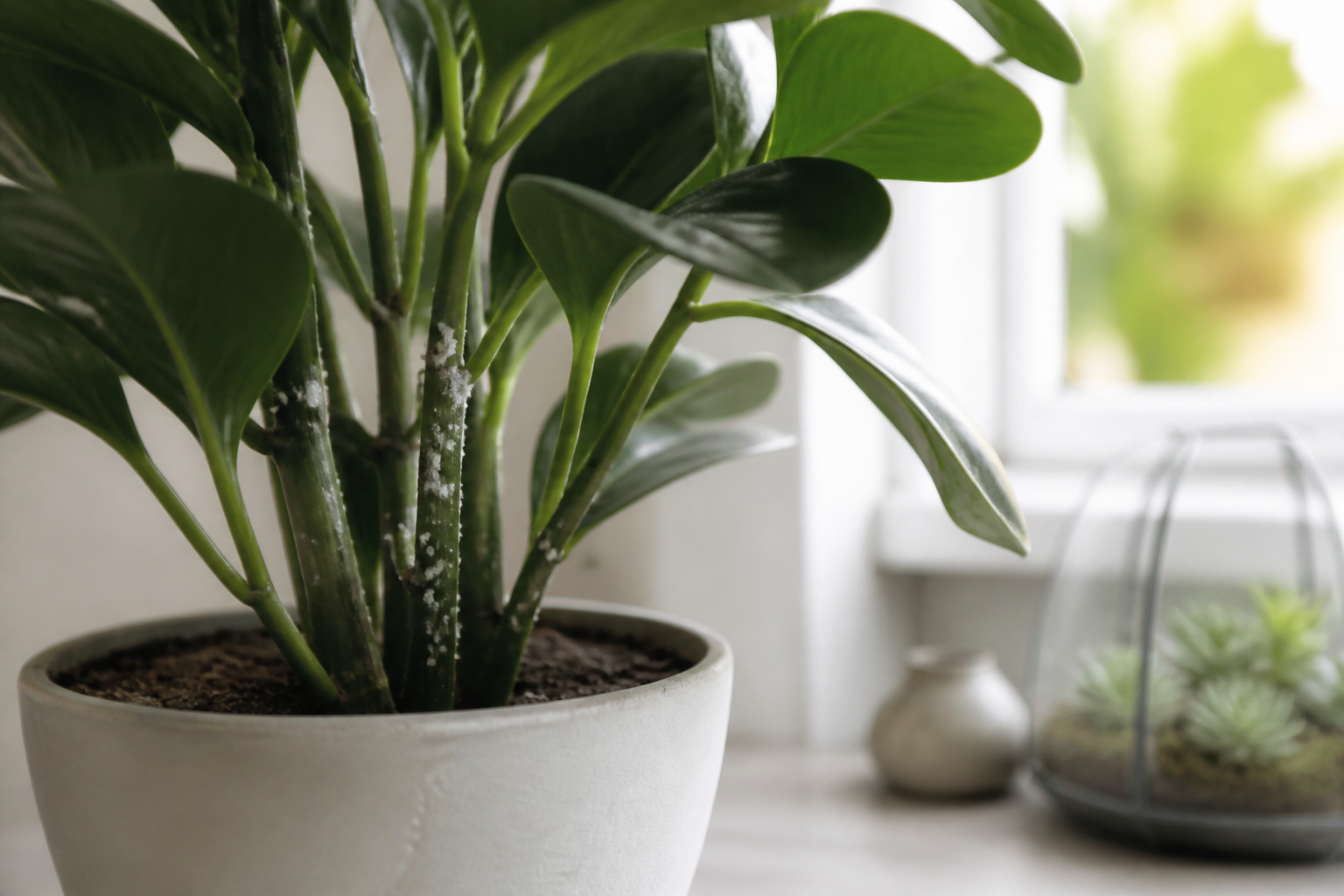
Adult females are small, soft, oval and wingless, and they wear a coat of white wax that makes them look fuzzy 2. Most are between about 1/20 and 1/5 inch long 3. The eggs sit in fluffy white masses, which are often the easiest sign to spot. The young, called crawlers, are yellow, orange or pink and have little wax at first, and they are the stage that wanders to nearby plants 2.
They like tight, protected spots such as the plant crown, the joints where leaves meet stems, and stems near the soil line 1. Check under plant ties and stake tape too 3.
What else can cause sticky leaves and white fluff?
Mealybugs suck sap and leave behind sticky honeydew, which can grow black sooty mold 2. Ants feed on that honeydew and protect the insects from natural enemies 1, so ants on an indoor plant are a clue worth following.
Why do mealybugs keep coming back?
A female lays roughly 100 to 200 or more eggs over 10 to 20 days, and indoors, where conditions stay warm and steady, every life stage can be present all year 1. Crawlers take about 6 to 9 weeks to mature, and generations overlap 3. That overlap is why a single wipe-down misses the next wave.
Some species live in the soil and feed on roots, which makes them harder to find until a plant is out of its pot 1.
How do you get rid of mealybugs on houseplants?
Work through these steps in order and keep notes on the date so you stay on a weekly rhythm.
- Isolate the plant. Move it away from every other plant so crawlers cannot spread 2.
- Remove what you can by hand. Pick off individual insects and egg masses, or prune away a badly affected stem 1.
- Dab with alcohol. Use a cotton swab and isopropyl alcohol of 70 percent or less, diluted with water. For a larger infestation, a 10 to 25 percent solution in a spray bottle is suggested 1.
- Rinse the leaves. A forceful spray of lukewarm water can knock insects loose 4, and washing with diluted dish soap and a cloth also removes honeydew 2.
- Repeat. Alcohol is repeated weekly until the infestation is gone 1, and two to three weekly applications are common when you use soap or oil 3.
Which treatment should you choose?
| Option | Best for | Keep in mind |
|---|---|---|
| Cotton swab with alcohol | A few visible insects | Test on a leaf first 1 |
| Water spray or soapy wash | Light infestations | Needs several rounds 2 |
| Insecticidal soap, oil or neem | Young nymphs | Cover every surface, including leaf undersides 2 |
| Systemic granules | Valuable plants only | Less reliable against mealybugs 1 |
Soap, oil and neem work by smothering the insects and do best on young nymphs, so thorough coverage matters 2. Knocking older nymphs off with water first, then spraying, helps the product reach them 3. Whatever you buy, follow the label.
When should you throw the plant away?
If the infestation is heavy, or the plant is one you could easily replace, discarding it is a reasonable choice. Extension specialists note that mealybugs are difficult to control on houseplants and that tossing a plant is often best unless it is especially valuable 4. Avoid reusing a contaminated pot 3. Our guide to repotting a houseplant covers the basics once you have clean pots.
How do you stop mealybugs from coming back?
- Inspect every new plant. Check before it comes home and keep checking for weeks afterward 2.
- Go easy on nitrogen. Too much fertilizer encourages the tender growth where mealybugs lay eggs 1. Our fertilizing guide explains how much is enough.
- Keep ants away. Ants can move crawlers between plants 3.
- Keep watching. Keep monitoring after treatment ends, because no single application is likely to catch every insect 1.
Other common pests call for different tactics, so see our guides on spider mites and fungus gnats. If you would rather have a hand with a stubborn plant, our plant care services are there for that.
Sources
Frequently asked questions
What kills mealybugs on houseplants?
For a few insects, a cotton swab dipped in diluted isopropyl alcohol works well. Soapy water, a water spray, insecticidal soap, horticultural oil or neem can help with larger groups. Repeat treatments, since eggs keep hatching.
Can mealybugs spread to other plants?
Yes. The young crawlers move to nearby plants, and ants can carry them too. Isolate any infested plant right away and check its neighbors.
How often should you treat mealybugs?
Plan on weekly treatments until you stop finding insects or white egg masses, and keep checking for several weeks afterward. Soap or oil usually needs two to three weekly rounds.
Should you throw away a plant with mealybugs?
If the infestation is heavy or the plant is easy to replace, discarding it is a sensible choice. Lightly affected plants can often be saved with persistent treatment.