How to Tell if a Houseplant Has Root Rot
Curated by Coletivate3 min read
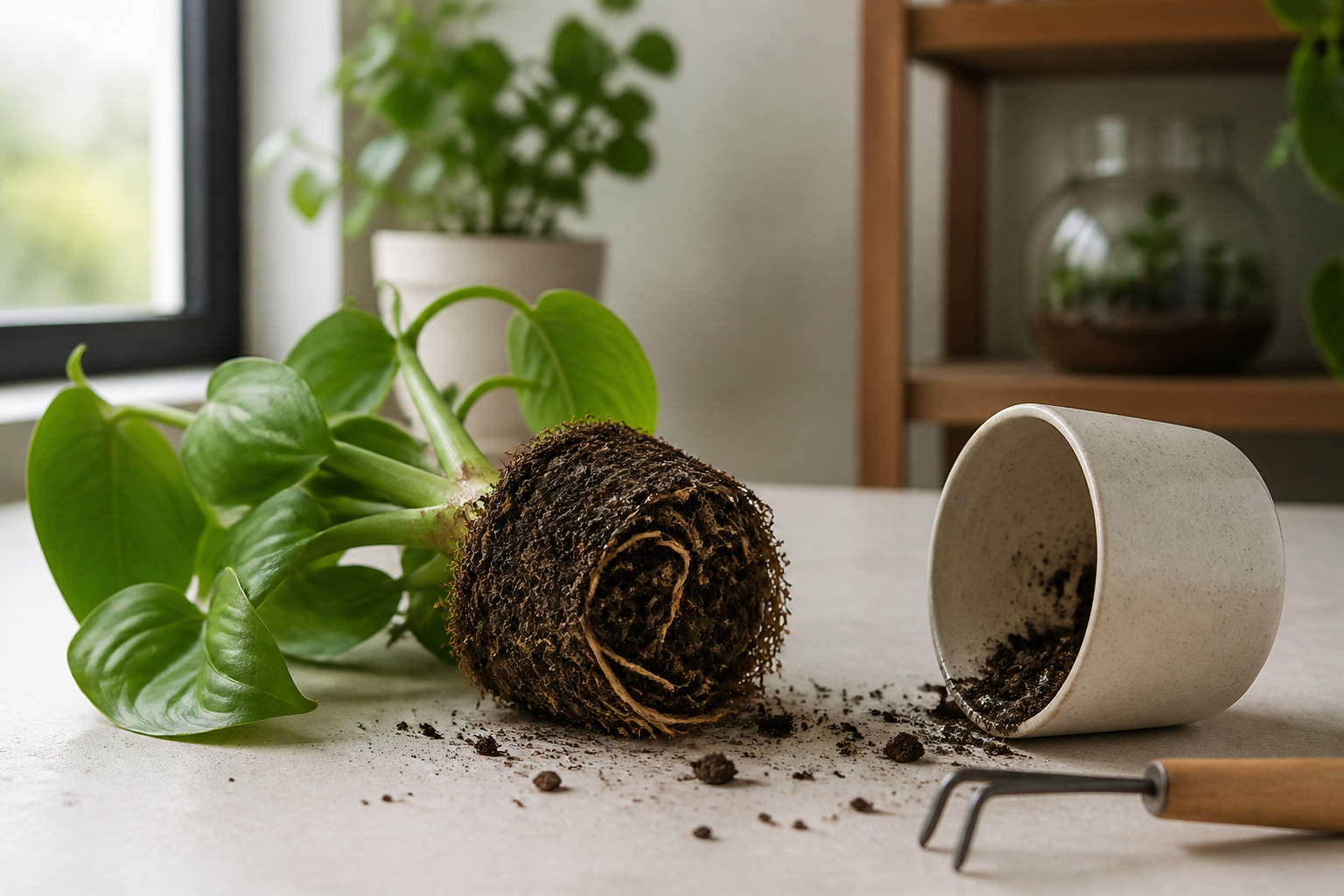
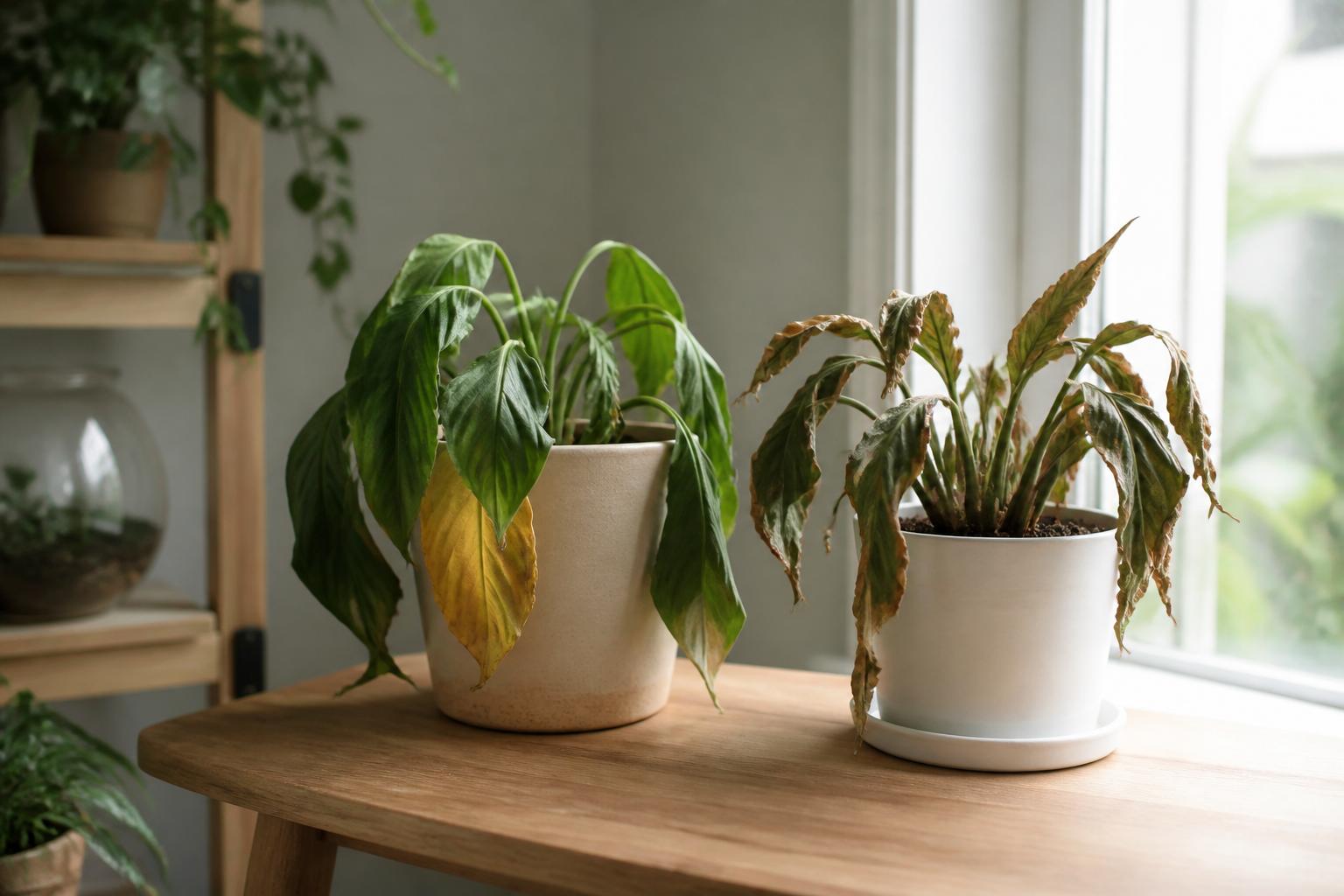
Root rot causes wilting, yellowing, and poor growth, even when the soil is wet 1. To confirm it, slide the plant out of its pot: healthy roots are firm and white, while rotted roots are mushy and brown or black 24. If only a few roots are affected, cut them out and repot in sterile soil 3.
Root rot is the reason many houseplants die after a stretch of well-meant watering. The leaves look thirsty, so the plant gets more water, and the problem gets worse. This guide explains what causes it, how to confirm it, and whether a plant can be saved.
What causes root rot in houseplants?
Root rot is linked to overwatering and a potting mix that does not drain well 2. Fungi such as Pythium, Phytophthora, and Rhizoctonia are among the organisms involved 1. Too much water also reduces the oxygen available to the roots 3.
What are the signs of root rot?
Above ground, the symptoms are general: yellowing, browning, and dieback of leaves, poor growth, and wilting even though the mix is moist 1. The bottom leaves often wilt first, and this is easy to mistake for underwatering 2. Other clues:
Because the symptoms look like underwatering, check the roots and the soil moisture before adding more water 2.
How do you check the roots?
Check the soil first. If it is dry and crumbly, the plant probably needs water. If it is wet and soggy, inspect the roots 4. If the plant sits inside a decorative outer pot, check that pot too, since water can collect there unseen 4.
- Gently pull the plant out of its pot.
- Look at the roots. Healthy roots are white and firm, with many fine feeder roots 24.
- Rotted roots are brown or black and mushy, and the outer layer may slip off the core 12.
| Healthy roots | Rotted roots |
|---|---|
| White and firm 4 | Brown or black 4 |
| Many fine feeder roots 2 | Mushy, outer layer can slip off 1 |
Can you save a plant with root rot?
It depends on how much of the root system is affected. If only a few roots are infected, cut them out and repot in sterile soil 3. If most of the roots are dark, soft, and dead, discard the plant 3. Fungicides exist, but a Clemson fact sheet notes they generally cost more than a replacement plant 3.
If healthy roots remain:
- Trim away the brown or black, mushy roots with clean scissors 3.
- Repot into a clean pot with drainage holes, using fresh, sterile potting mix and not garden soil 13.
- Water lightly, then let the soil dry before watering again. See our repotting guide for the steps.
- Keep the plant separate from your others while it recovers 1.
Scrub old pots before reusing them. Clemson suggests a solution of one part bleach to nine parts water 3.
How do you prevent root rot?
Prevention comes down to water and drainage:
- Use a well-drained potting mix and water by need, not by a fixed schedule 2. See how often to water houseplants.
- Use pots with drainage holes and do not leave pots standing in saucer water 3.
- Use clean or new pots and sterile potting media 1.
- Inspect new plants before placing them near your others 1.
If a plant is drooping and you cannot tell whether it is too wet or too dry, read overwatering versus underwatering. For yellowing leaves with no clear cause, see why houseplant leaves turn yellow.
If you would like a second pair of eyes on a struggling plant, see our plant care service.
Sources
- Root Rots of Indoor Plants, University of Maryland Extension
- Root Rot, Iowa State University Extension and Outreach
- Houseplant Diseases and Disorders, Clemson Home and Garden Information Center
- Diagnosing Houseplants 101: Is Your Plant Diseased or Just Overwatered?, University of Florida Emerging Pathogens Institute
Frequently asked questions
What does root rot look like?
Healthy roots are white and firm. Rotted roots are brown or black and mushy, and the outer layer may slip off. Above ground you may see yellowing, wilting, and poor growth even though the soil is wet.
Can a plant recover from root rot?
Sometimes. If only a few roots are affected, cut them out and repot in sterile soil. If most of the roots are dark, soft, and dead, the plant is unlikely to recover.
Why is my plant wilting when the soil is wet?
Wilting with moist soil is a classic sign of root rot, because damaged roots cannot take up water. Check the roots before adding more water.
Should I use fungicide for root rot?
Fungicides exist, but extension guidance notes that they generally cost more than a new plant. Fixing drainage and watering habits matters more.