What Are Springtails, and Do You Need Them?
4 min read
Springtails are small, harmless animals that live in soil and leaf litter, and they are one of the most useful additions to a terrarium. They are tiny, easy to keep, and they work quietly in the background. If you are building a bioactive enclosure, you will hear about them constantly. Here is what they are, what they do, and whether you really need them.

What springtails are
Springtails (Collembola) are tiny, wingless arthropods, usually one to three millimeters long. They are not insects in the strict sense, though they are close relatives. They get their name from a small, tail-like structure folded under the body, which snaps against the ground and flings them into the air. That is why they jump when disturbed.
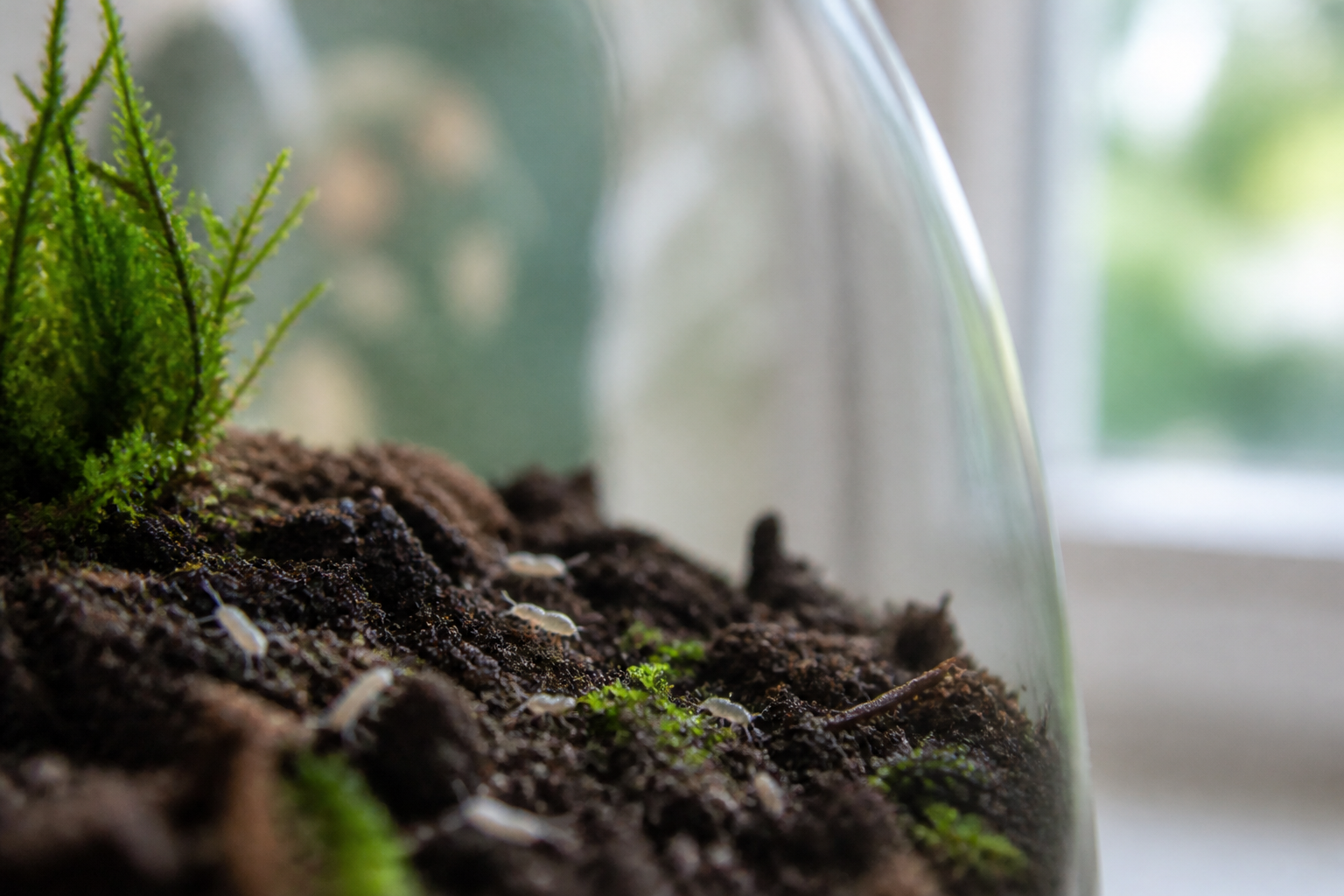
They live almost everywhere there is damp soil, from forests to your garden. In a terrarium, you will see them as tiny white or gray specks on the soil, on glass, and on water droplets.
What they do in a terrarium
Springtails eat mold, fungi, and decaying organic matter. In a humid enclosure, mold can bloom on fresh wood, leaf litter, and uneaten food. Springtails graze on it, which keeps the terrarium looking clean. They also break down waste, which supports the soil and plants.
They are not dangerous to plants or people. They do not bite, and they do not eat healthy plant roots in normal conditions.
Do you need them?
If you are building a bioactive terrarium, then yes, springtails are strongly recommended. They are the fastest way to deal with mold, and they form half of a good clean-up crew along with isopods. See how to set up a bioactive terrarium.
If you have a simple planted terrarium without animals, you can manage without them, though they still help to control mold. If your enclosure is dry, springtails will not thrive, because they need humidity.
For houseplants in pots, you generally do not need to add them. Springtails sometimes appear in overwatered houseplant soil, and they are usually harmless, but they can be mistaken for pests. If you see tiny flies, those are different, and you can read about fungus gnats.
Springtails and isopods
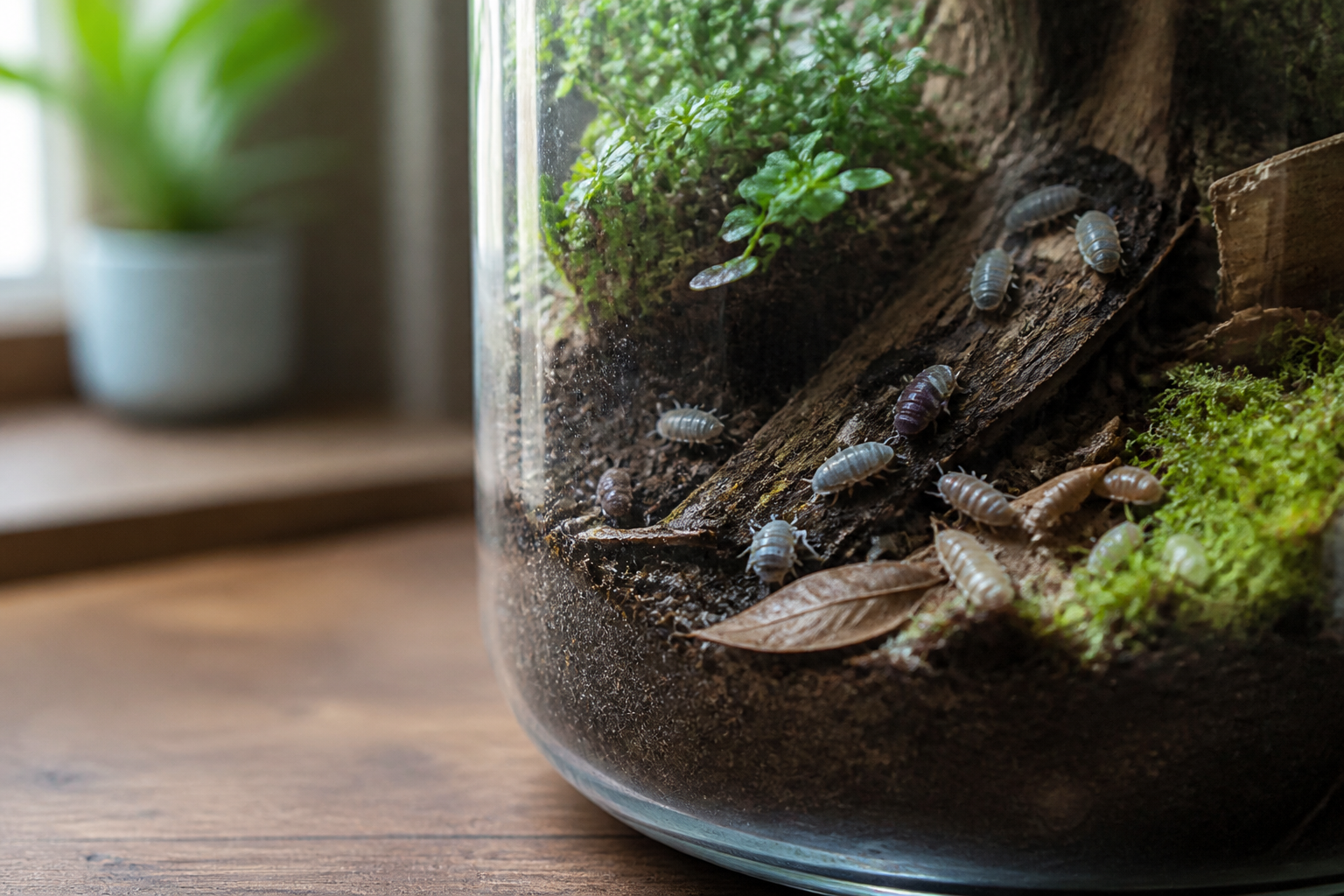
Springtails and isopods complement each other. Isopods handle bigger material such as leaves, wood, and waste, while springtails take on mold, fungus, and fine debris. Many keepers add both. See the best isopods for bioactive terrariums.
Common species
- Folsomia candida, a white species, is widely used. It is small and breeds quickly, and it prefers damp, cool conditions.
- Sinella curviseta, another white species, is slightly larger, and it is popular.
- Tropical species, such as the tropical white or pink springtails, handle warmer conditions.
Most suppliers will sell them as a culture. For terrariums, white species are visible against dark soil, which makes them easy to watch.
How many to add
A starter culture, typically a small container, is enough for most terrariums. Springtails multiply to the level the food supply supports. More is not necessarily better at the start. If the enclosure is large, you can add a second culture.
How to add them
- Make sure the terrarium has a damp substrate and some food sources, such as leaf litter and a little fresh wood.
- Open the culture over the terrarium, and tap or rinse springtails onto the surface. Many sellers include charcoal or substrate, and you can add that too.
- Mist lightly, and keep the surface damp.
- Feed lightly, with a small pinch of yeast or fish flakes, or let them eat naturally occurring mold.
Culturing your own
Springtails are easy to culture, and it is a good way to keep a ready supply.
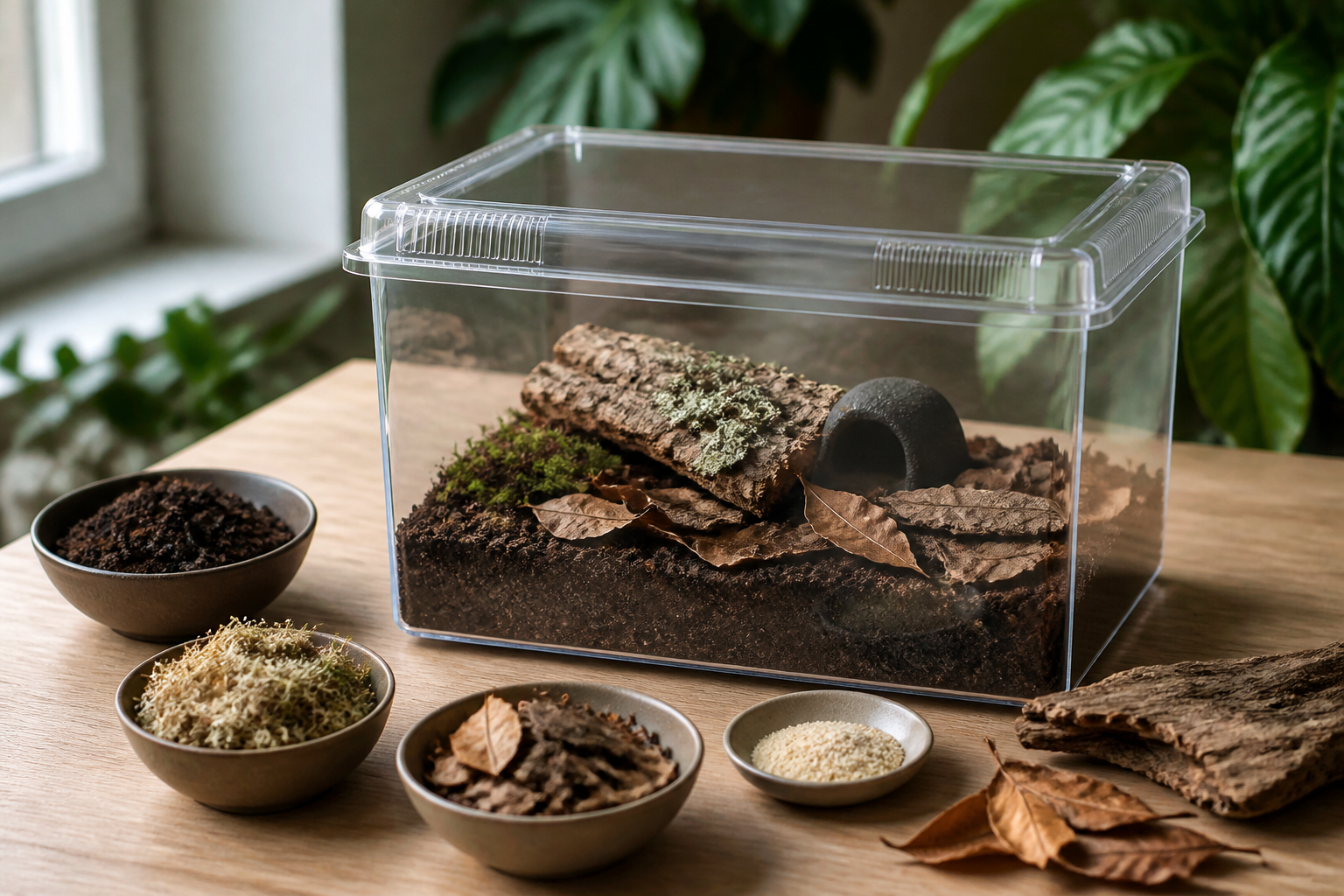
- Use a small plastic container with a ventilated lid.
- Fill it with a damp substrate, such as coconut coir, charcoal, or a mix of both.
- Add springtails.
- Feed with a small amount of dry yeast or fish flakes every week or so, and remove old food.
- Keep the culture damp, and out of direct sun.
Troubleshooting
- Few springtails visible. They hide in the substrate. Look at the glass, on wood, and on water droplets.
- Springtails disappearing. The terrarium may be too dry, or isopods may be eating them in small numbers, which is normal.
- Mold persisting. Reduce moisture, add ventilation, and add more springtails.
Springtails are among the simplest ways to make a terrarium healthier, and they ask for almost nothing. If you would like help with a setup, our plant care service can lend a hand, and our guide to starting an isopod colony covers the next step.
Frequently asked questions
Are springtails harmful?
No. They do not bite, they do not harm people or pets, and they generally do not damage healthy plants. They eat mold and decaying matter.
Why are there springtails in my houseplant soil?
They usually mean the soil is quite damp and has some decaying matter. They are harmless, and drying the soil out a little between waterings reduces their numbers.
How do springtails reproduce?
Quickly in humid, food-rich conditions. A small starting culture can grow to a large population within weeks.
Can I keep springtails without isopods?
Yes. Springtails do well alone and are enough to control mold in many terrariums. Adding isopods helps with larger leaf litter and waste.