The Best Isopods for Bioactive Terrariums
3 min read
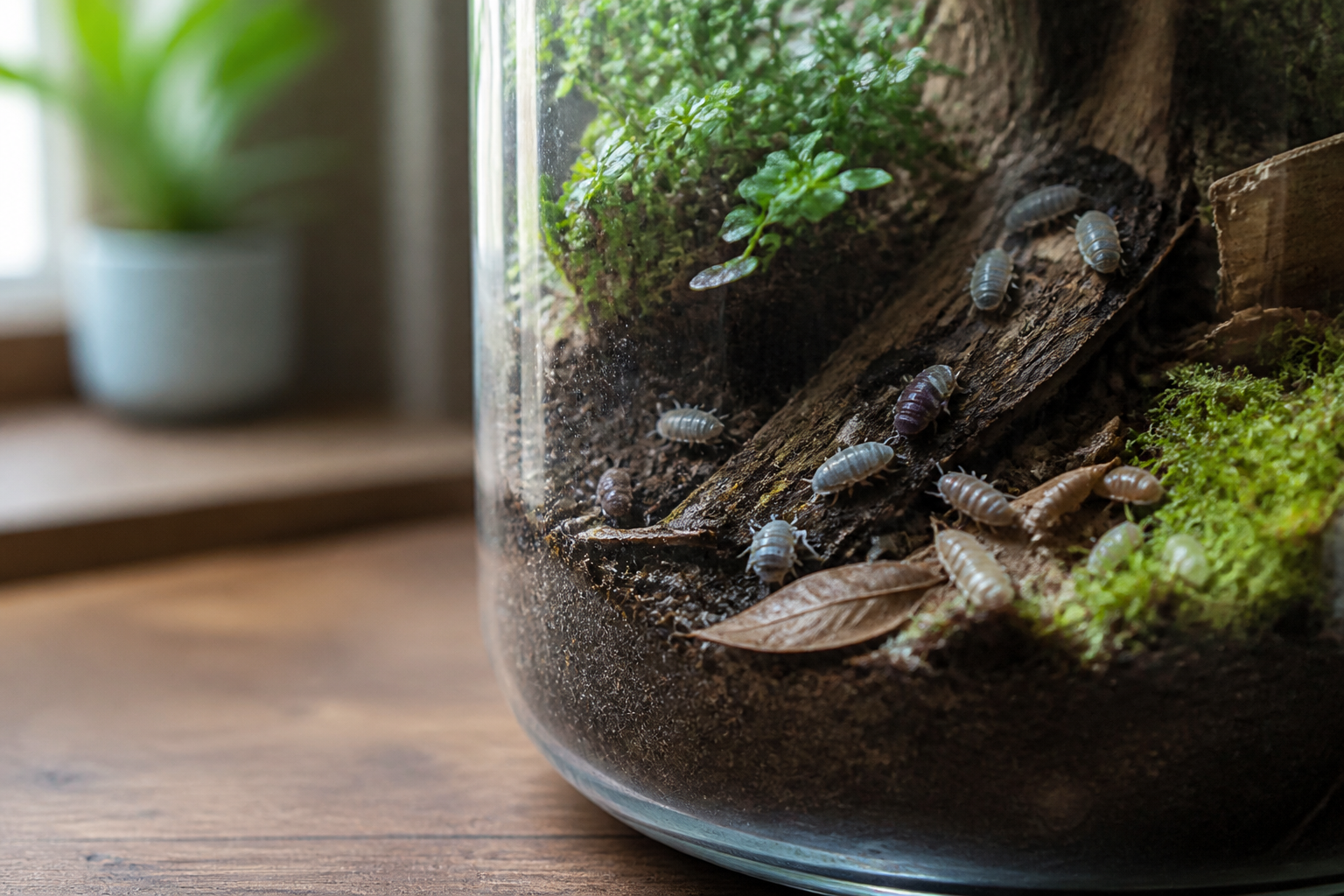
In a bioactive terrarium, isopods are the clean-up crew. They eat dead leaves, shed plant matter, and waste, then turn it into material that feeds the soil and plants. The right species keeps the enclosure tidy, and the wrong one can struggle or become a problem. Here is how to choose, along with a look at the most popular options.

What to look for in a clean-up isopod
Good bioactive isopods share several traits:
- They breed reliably in captivity, so the crew stays healthy.
- They stay small enough not to damage plants or crowd smaller animals.
- They match your terrarium's conditions, such as humidity and temperature.
- They are not notorious climbers or escape artists, unless you can contain them.
- They are active enough to do the job, but not so aggressive that they disturb the setup.
Many species are available, and a good rule is to pick based on your enclosure's climate first.
Dwarf white isopods (Trichorhina tomentosa)
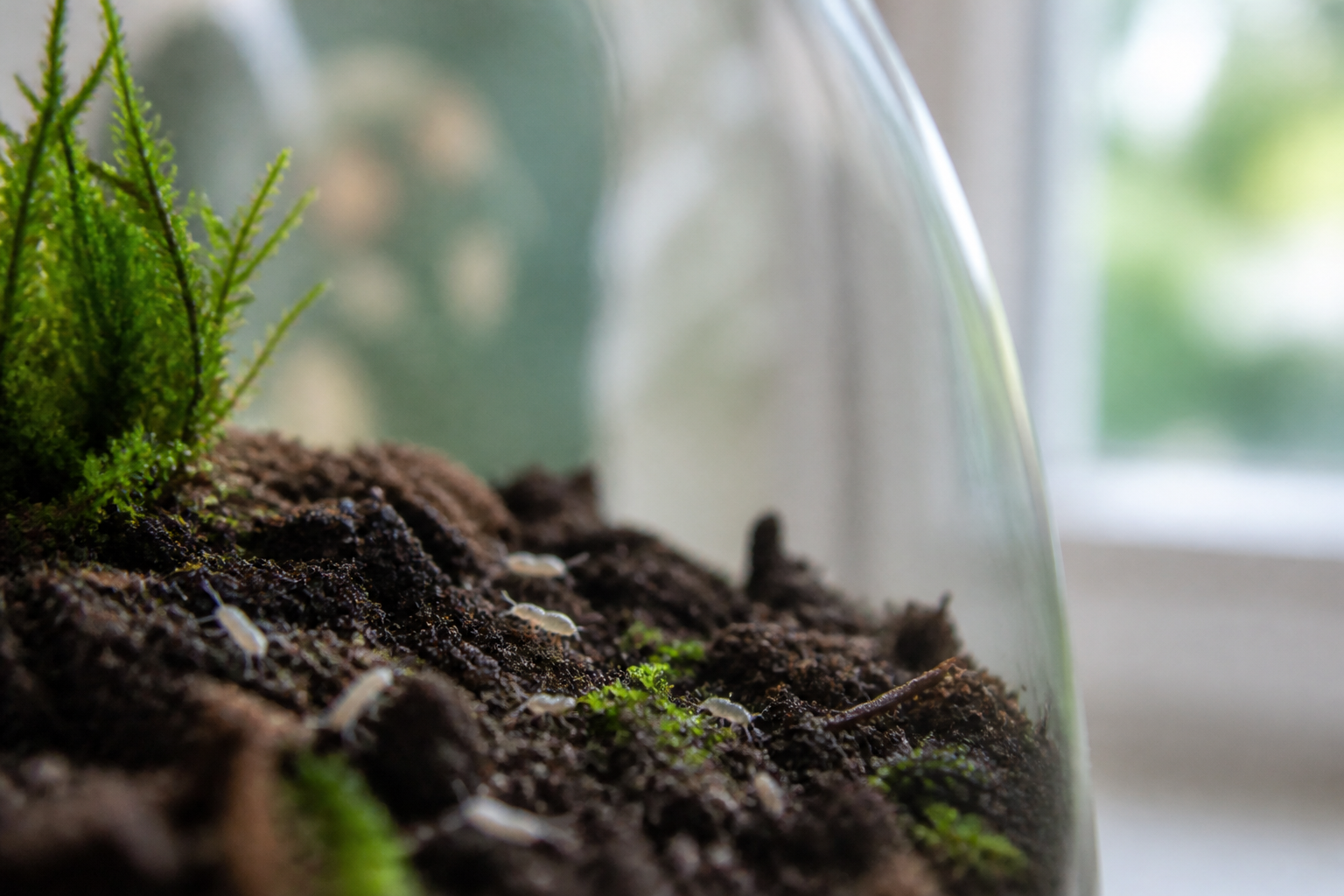
Dwarf whites are probably the most popular clean-up crew isopod. They are tiny, pale, and they breed quickly, often establishing a large population in a few months. They thrive in warm, humid conditions, and they tend to stay in the substrate, so they are not always visible. They work well in humid tropical terrariums. They can be too small for some uses and are sometimes eaten by larger terrarium animals, though that depends on the setup.
Dwarf purple isopods (Venezillo sp.)
Dwarf purples are slightly larger than dwarf whites, with a purplish gray color. They like humid conditions, breed well, and are more often seen on the surface than dwarf whites. They are a good choice for tropical enclosures that prefer constant moisture.
Powder blue isopods (Porcellionides pruinosus)
Powder blues are a hardy, fast-breeding species with a blue-gray, powdery look. They tolerate slightly drier conditions than many others, and they handle a range of temperatures. They can reproduce explosively in the right conditions, so they are a good choice for a feeder colony or a robust clean-up crew. They do better with a drier area than a constantly soggy enclosure.
Powder orange isopods (Porcellionides pruinosus "orange")
A color variety of the powder isopod, with similar care and behavior. They are popular for their bright orange color, which is easy to see in a terrarium.
Zebra isopods (Armadillidium maculatum)
Zebra isopods are striking, with black and white stripes. They can roll into a ball like pill bugs. They are attractive but are a more moderate breeder, and they prefer slightly drier conditions with good ventilation. They suit a display colony more than a rapid clean-up crew.
Other options
Many other species exist, from rubber ducky isopods to giant and rare varieties. Some are demanding, slow to reproduce, or expensive. They are fun for dedicated hobbyists, but a beginner does better to start with a hardy species. A well-known rule is to start simple, then explore.
Matching species to your terrarium
- Tropical, high humidity. Dwarf whites and dwarf purples are good matches.
- Warm, drier, with a drier zone. Powder blues and powder oranges work well.
- Display colonies. Zebras and other pattern species are fun, but need care.
- Terrariums with small animals. Consider the size of the isopods and the risk that other animals will eat them, and make sure the crew can hide and breed.
Isopod and springtail teams
Many keepers pair isopods with springtails. Isopods handle larger leaf litter and waste, while springtails clean up mold and fungus. Together they make a very effective crew. See what springtails are and whether you need them.
Avoid wild-collected isopods
Wild isopods may carry parasites, and some species are not suited to enclosed habitats. Buy from a reputable breeder, and check that the species is appropriate for your area. In some places, releasing non-native isopods into the wild is a concern, so never release captive animals outdoors.
Setting up for success
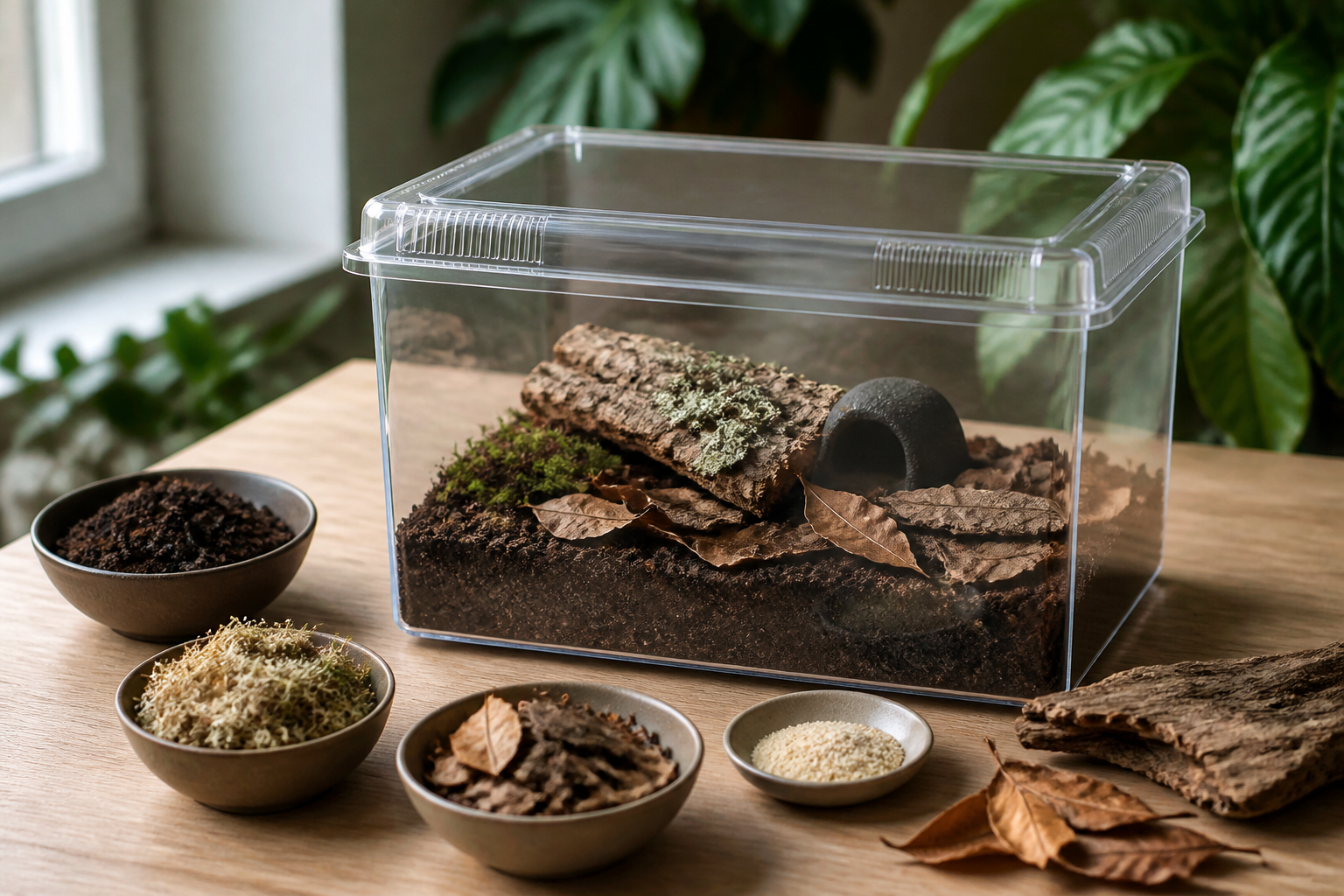
Whatever species you choose, give them the basics: a damp area and a drier area, plenty of leaf litter and decaying wood, a calcium source, and ventilation. See how to start an isopod colony and what isopods eat. For the full setup, see how to set up a bioactive terrarium.
If you want help choosing a crew for a particular enclosure, our plant care service can advise.
Frequently asked questions
What is the best isopod for a beginner bioactive terrarium?
Dwarf whites and powder blues are popular choices because they are hardy and breed readily. Pick based on your terrarium's humidity.
Can I mix different isopod species?
You can, but species with similar needs work best. Some may compete, and some interbreed within a genus, so many keepers stick to one species per enclosure.
How many isopods should I add to a terrarium?
A starter group of around 10 to 25 is common, depending on enclosure size. They will grow in number as conditions allow.
Will isopods harm my terrarium plants?
Generally they eat dead and decaying matter, not healthy plants. They may nibble tender seedlings or soft, damaged tissue, especially if food runs low.