What Do Isopods Eat? A Complete Feeding Guide
3 min read
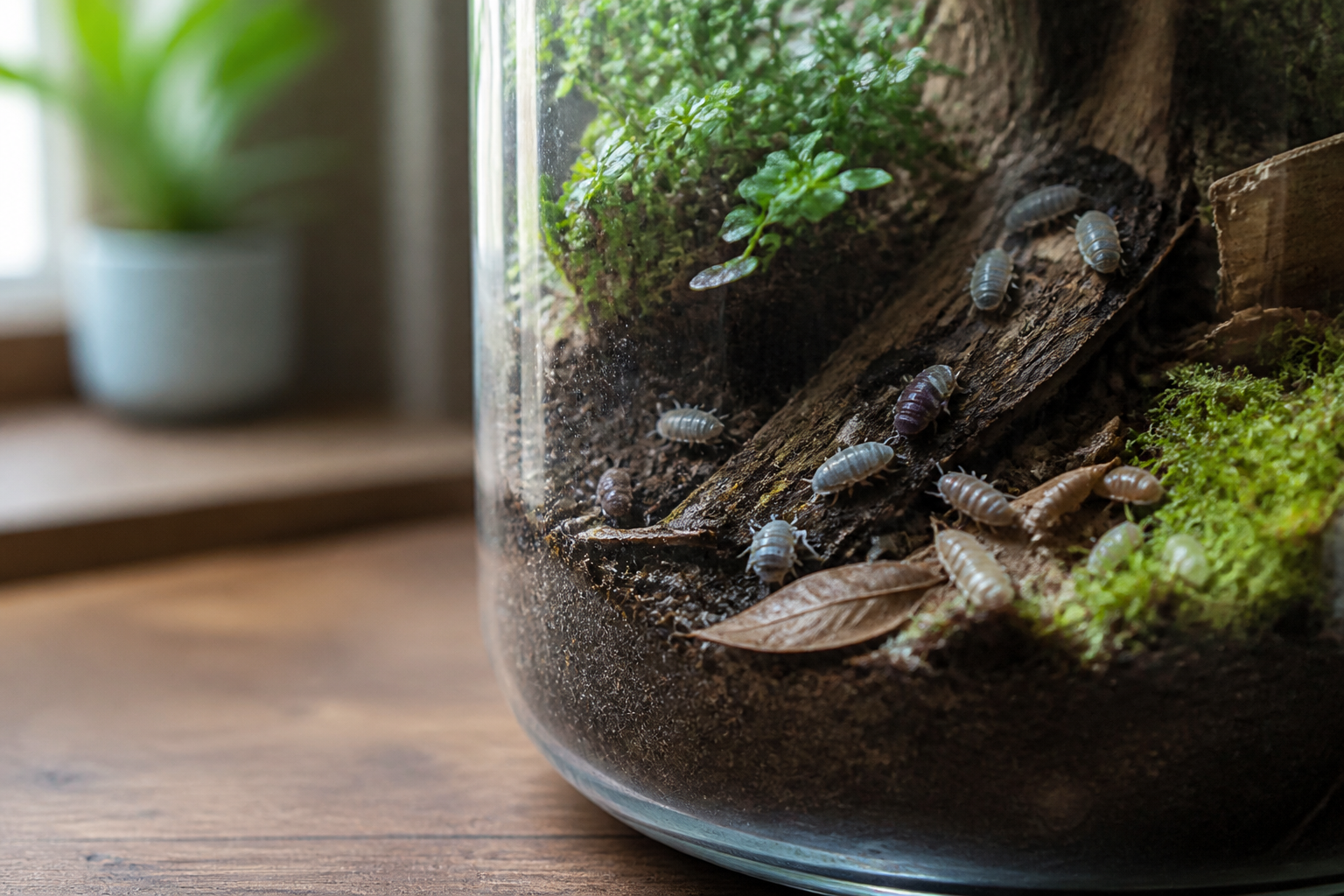
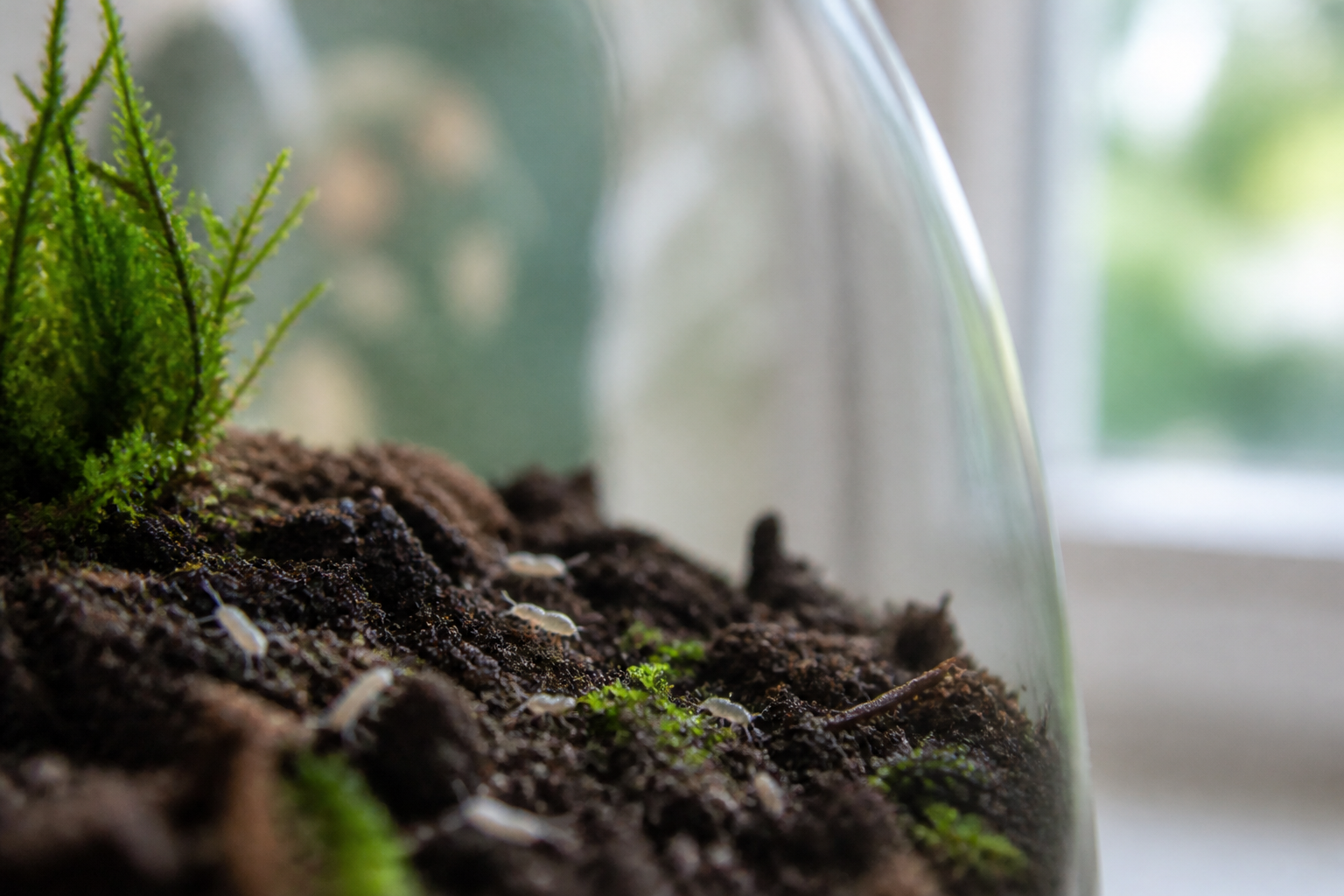
Isopods are detritivores. In nature they live on the forest floor, eating decaying leaves, rotting wood, fungi, and other organic matter. In captivity, a colony does best with a diet that imitates this, plus a few extras. Feeding is simple, and it is one of the most important parts of keeping a healthy colony. Here is what to offer and what to avoid.

The foundation: leaf litter and wood
The base of an isopod diet is dry leaves and decaying wood. These should be present in the enclosure at all times, so the colony can graze whenever it likes.
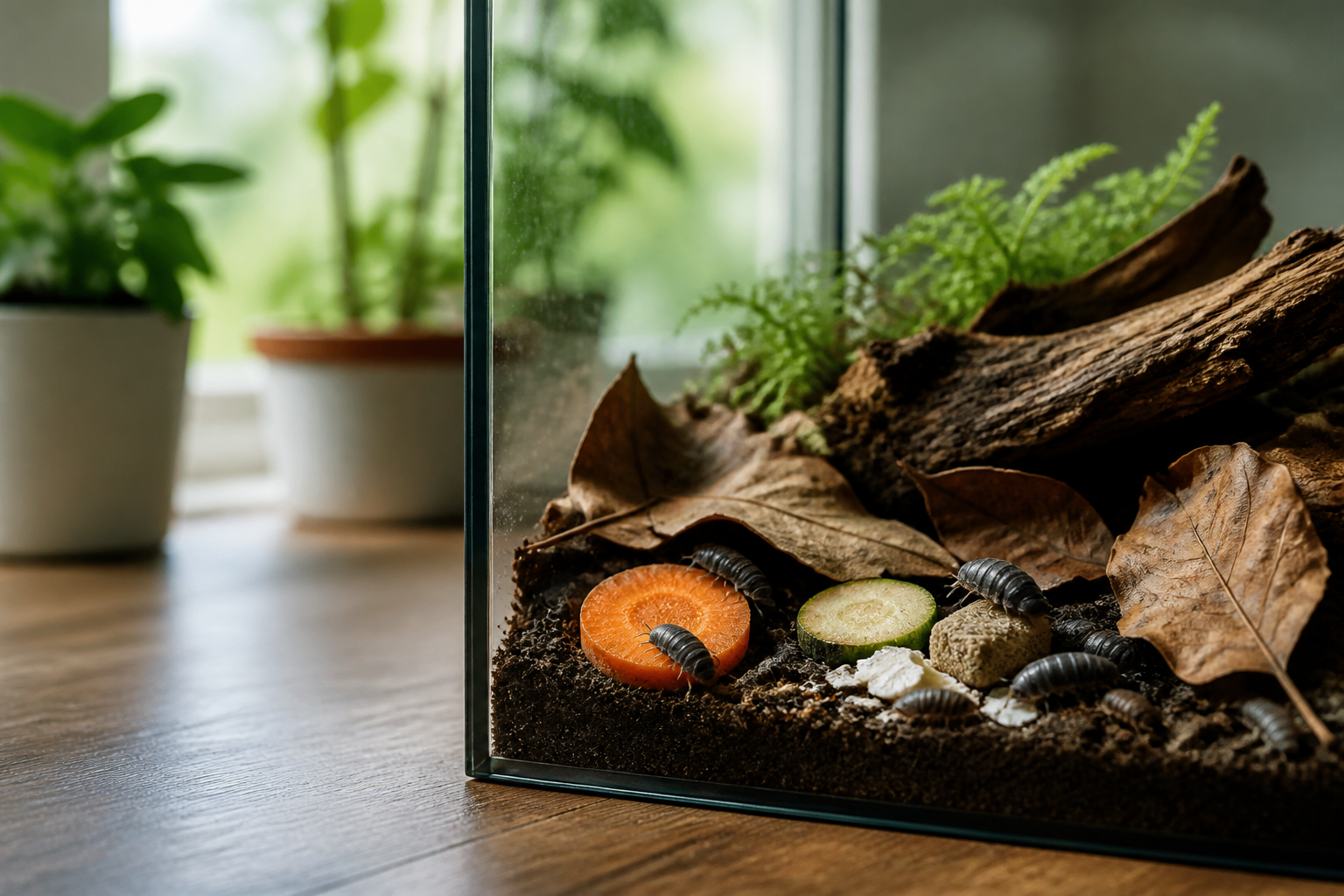
- Leaf litter. Oak, maple, magnolia, beech, and other hardwood leaves are popular. Oak and magnolia break down slowly, which makes them durable. Collect leaves from a clean area that has not been treated with pesticides, away from roads. You can also buy dried leaf litter.
- Decaying hardwood. Rotting wood supplies cellulose, fungi, and minerals. Pieces of soft, partially rotted hardwood are ideal. Cork bark and other safe barks are used mostly for hiding, though isopods nibble them.
- Avoid softwoods. Pine, cedar, and other resinous woods can be harmful.
As leaves soften and grow fungi, isopods eat them more eagerly. Many keepers soak dry leaves briefly before adding them.
Supplemental foods
Beyond the base diet, you can offer fresh and prepared foods once or twice a week.
Vegetables
Isopods like soft vegetables, including carrots, zucchini, sweet potato, squash, and cucumber. Cut them into small pieces, or slice thinly. Rinse produce, and ideally use organic. Remove uneaten pieces after one or two days to avoid mold and pests.
Protein
Protein supports growth and breeding. Options include dried fish flakes, shrimp pellets, dried insects, or a small piece of fish food, in small amounts. Do not overdo it, since protein foods spoil quickly and can attract mites and flies.
Fungi
Mushrooms can be a good occasional treat, and fungi that grow naturally on wood and leaves feed the colony.
Calcium
Isopods molt, shedding and sometimes eating their old exoskeletons, and they need calcium to build new ones. Offer a calcium source at all times.
- Cuttlebone, a common and convenient option
- Crushed eggshell, well rinsed and baked or boiled for safety, then crushed
- Oyster shell grit or other calcium supplements made for reptiles
Calcium also supports breeding and helps prevent weak molts.
Foods to avoid
- Citrus and acidic fruits, which can upset the substrate
- Salty, processed, or seasoned foods
- Cooked, oily, or sugary foods
- Dairy and meat scraps, which spoil quickly and attract pests
- Anything treated with pesticides
- Softwood leaves and needles
How often and how much
A good approach is to offer small amounts and see how quickly they are eaten. If food is left after two days, you are giving too much. Spoiled food leads to mold, mites, and unpleasant smells. Keep the main food source, leaf litter and wood, constant, and treat the extras as supplements.
Water
Isopods get moisture from humid substrate, damp food, and condensation. Provide a damp area, not standing water, which can drown them. A moisture gradient lets them choose where to rest. See how to start an isopod colony.
Signs of a good diet
- Active colony with regular breeding
- Healthy, intact exoskeletons and successful molts
- Steady growth of juveniles
- Substrate that slowly breaks down without foul smells
Signs of problems
- Pale or sluggish isopods can mean poor diet or stale conditions.
- Failed molts can point to low calcium or low humidity.
- Mold outbreaks suggest too much fresh food or too much moisture.
- Mites are often a sign of excess food. A small amount is normal, but a boom means you are overfeeding.
Feeding in a bioactive terrarium
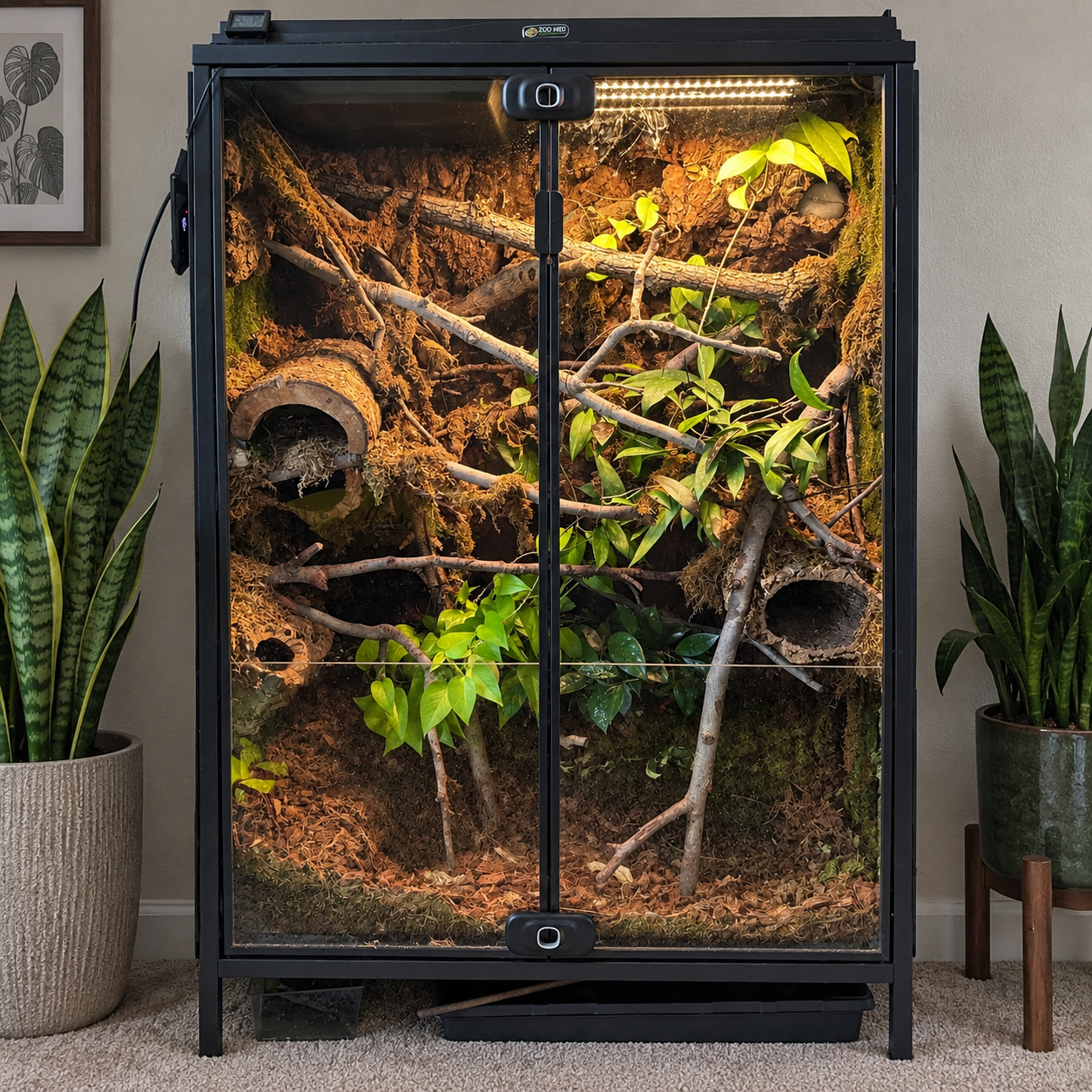
In a bioactive setup, isopods help clean up waste and leaf litter, and they need continued leaf litter and some supplemental food, or they will run out of food. Springtails will share the mold and fungi. See how to set up a bioactive terrarium and springtails.
Different species have slightly different needs, with some preferring drier conditions and more protein. See the best isopods for bioactive terrariums. If you have questions about a particular setup, our plant care service can help.
Frequently asked questions
What is the best food for isopods?
Decaying hardwood leaves and rotting wood are the best base diet. Supplement with soft vegetables, a little protein, and a constant calcium source such as cuttlebone.
Do isopods need calcium?
Yes. They need calcium to build their exoskeletons after molting. Offer cuttlebone or crushed eggshell at all times.
How often should I feed isopods?
Keep leaf litter and wood available at all times, and offer fresh vegetables or protein once or twice a week in small amounts. Remove leftovers after a day or two.
Can isopods eat fruit?
In small amounts, soft fruit is sometimes offered, but citrus and very sugary fruit are best avoided. Fruit spoils quickly and attracts pests.