How to Care for a Snake Plant
Curated by Coletivate3 min read
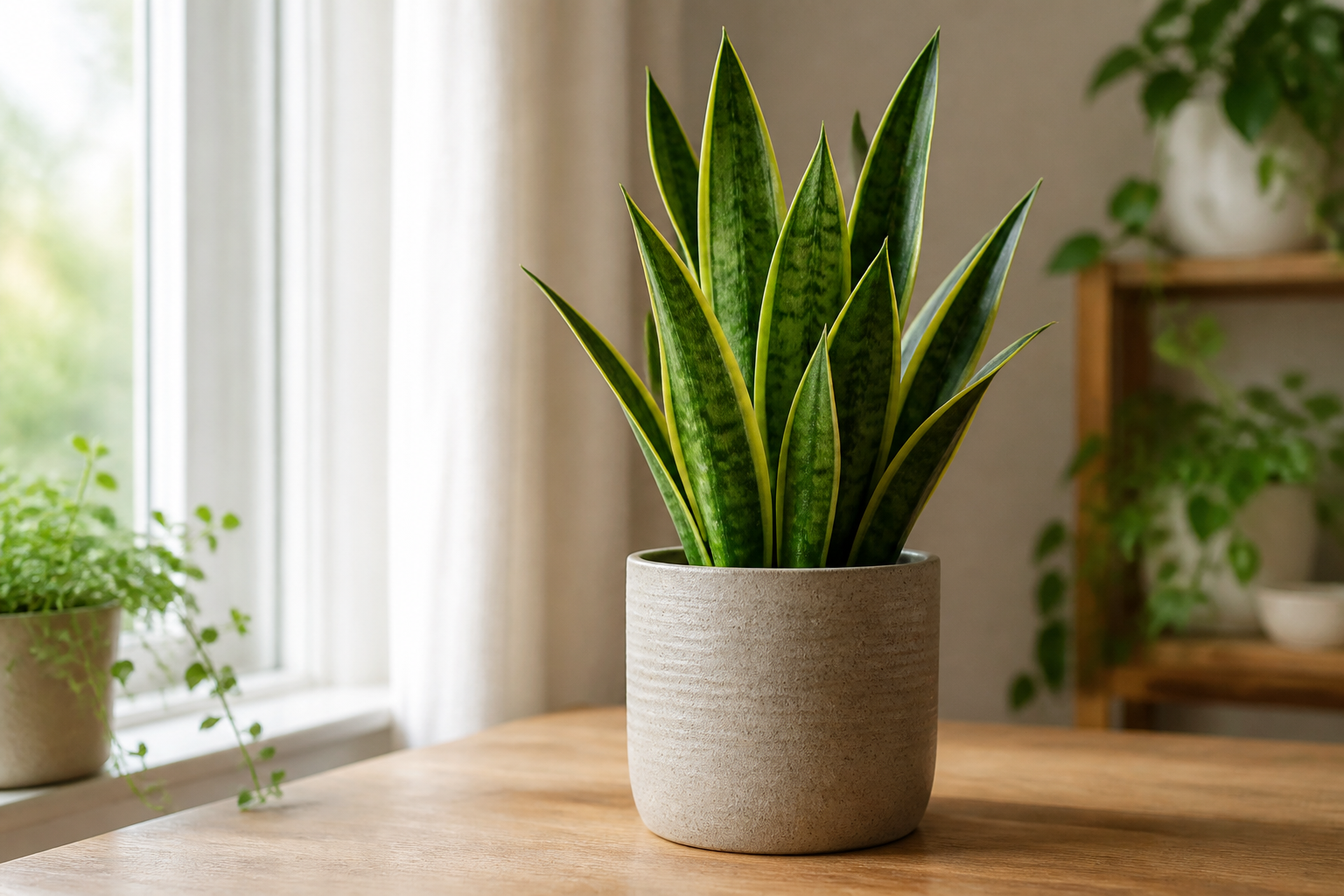
Snake plants do best in bright, indirect light but tolerate low light 12. Water only when the soil is completely dry, since overwatering is the main thing that kills them 1. Use a well-drained mix such as cactus soil, a pot with drainage holes 1, and keep the plant away from temperatures below 55°F 2.
Snake plants have a reputation as the plant you cannot kill, and that is mostly earned. The one thing that reliably ends them is too much water. This guide covers light, watering, soil, temperature, feeding, repotting, and the few problems worth watching for.
How much light does a snake plant need?
Bright, indirect light is best, though snake plants tolerate low light 12. Tolerating is not the same as thriving: a plant kept in the darkest corner of a room can decline after several months 2. Direct afternoon sun can scorch the leaves 3.
| Light | What to expect |
|---|---|
| Bright, indirect | Best choice 12 |
| Low light | Tolerated, but the darkest spots can lead to decline over time 2 |
| Direct afternoon sun | Can scorch the leaves 3 |
If your home is dim, a snake plant is a reasonable choice, and our guide to low light houseplants covers other options. If you are unsure how bright a spot really is, see what bright indirect light means.
How often should you water a snake plant?
Let the soil dry completely between waterings 3. The thick leaves store moisture 3, so going a month or so without water is fine 1. During the growing season, water when the soil is dry and do not let it become soggy 2. In winter, water much more sparingly, about once a month 2.
Avoid pouring water into the center of the leaf rosette 4. If you are unsure whether a plant needs more water or less, see overwatering versus underwatering and how often to water houseplants.
What soil and pot are best?
Use a cactus or succulent mix, or a regular mix with perlite added 13, in a container with drainage holes 13. A few practical points about the pot:
- A heavy pot helps keep tall varieties from tipping over 1.
- A wide clay pot also resists tipping 4.
- Growing roots can break pots, so some growers choose plastic 2. A rootbound plant can crack clay 1.
What temperature does a snake plant prefer?
Normal household temperatures suit snake plants. They do well between about 60 and 85°F indoors, tolerate dry air, and should be kept away from cold drafts 3. Avoid anything below 55°F 2.
Do snake plants need fertilizer?
Only a little. During the growing season, feed about once a month with an all-purpose fertilizer diluted to half strength 1. Our fertilizing guide explains how to apply it.
When should you repot or divide a snake plant?
One extension source suggests repotting about every five years, though experiences vary 1. Repotting is also the easiest time to divide a crowded plant 2, and division is the simplest way to propagate one 1. You can also root leaf cuttings, either in rooting hormone or in water that you change daily 2. Our repotting guide walks through the steps.
What problems affect snake plants?
The most common problem is root rot from overwatering 14. Mealybugs and spider mites appear occasionally 14, and we cover treatment in our guides to mealybugs and spider mites.
A few care habits help:
- Cut damaged leaves off at soil level 1.
- Dust the leaves occasionally 1.
- Keep the plant out of cold drafts and afternoon sun 3.
If you would like help choosing or caring for plants, see our plant care service.
Sources
Frequently asked questions
How often should I water a snake plant?
Only when the soil is completely dry. In the growing season that may be every few weeks, and in winter about once a month or less. The exact timing depends on light and temperature, so check the soil rather than following a fixed schedule.
Can a snake plant live in low light?
Yes, it tolerates low light, but it does best in bright, indirect light. In the darkest corners it may slowly decline over several months.
Why are my snake plant's leaves soft or mushy?
Soft, mushy growth at the base usually points to root rot from overwatering. Stop watering, take the plant out of the pot, and inspect the roots. Our root rot guide explains what to look for.
Are snake plants safe for pets?
No. All snake plant species are considered toxic to pets because they contain saponins, so keep them out of reach of cats and dogs.
How do I propagate a snake plant?
Dividing the plant at repotting is the easiest method. You can also root leaf cuttings in rooting hormone or in water, changing the water daily.