How to Care for a ZZ Plant
Curated by Coletivate3 min read
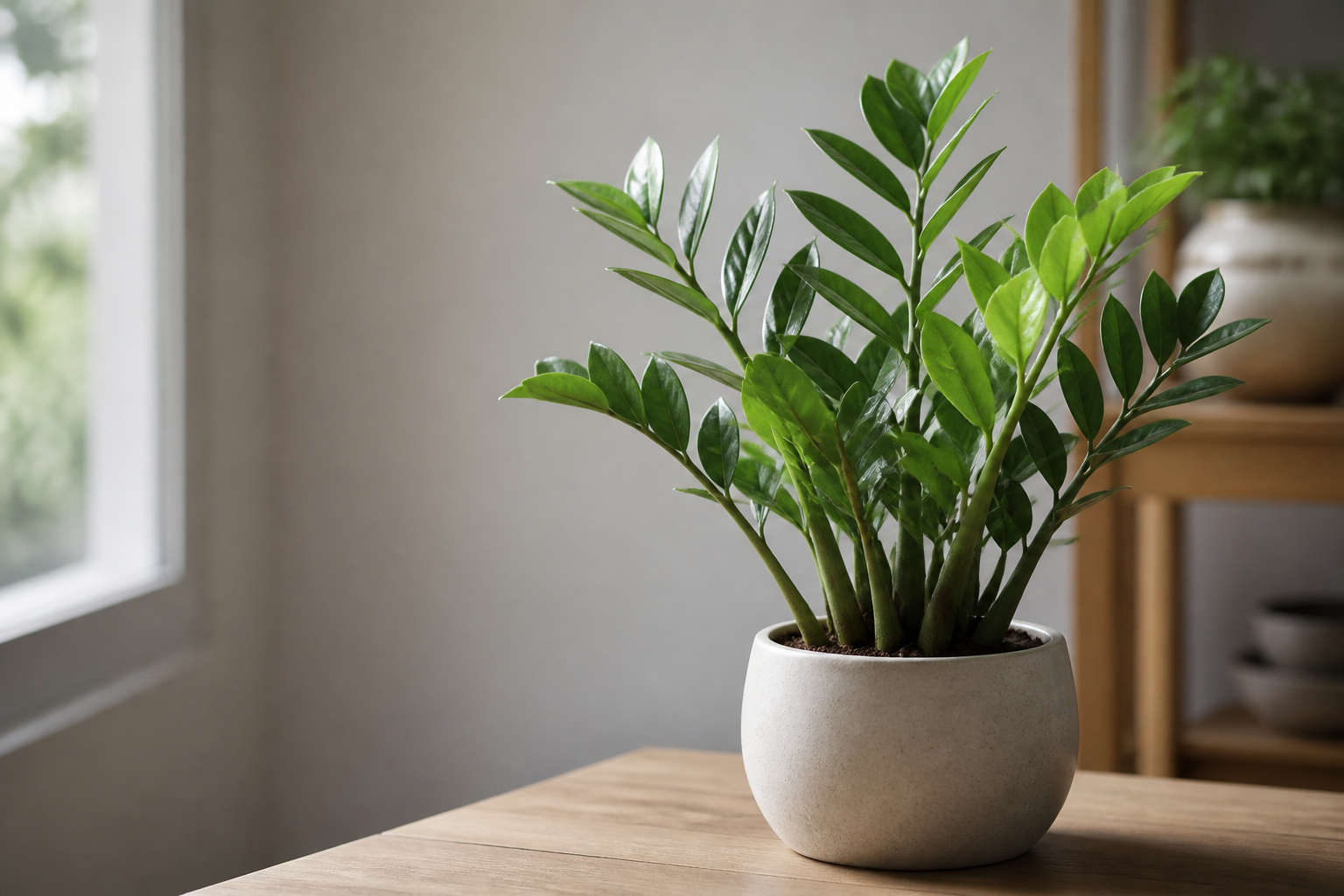
ZZ plants grow in a wide range of light, from low light to bright indirect light 12. Water only after the soil has dried out, because overwatering is the main cause of trouble 13. Keep the plant above 60°F in a coarse, well-drained mix, and keep it away from pets, since every part is toxic if eaten 12.
The ZZ plant (Zamioculcas zamiifolia) is a favorite for beginners and for dim rooms. It grows slowly and asks for little. This guide covers light, watering, soil, temperature, feeding, propagation, and safety.
How much light does a ZZ plant need?
ZZ plants tolerate a wide range of light, including low light 1. Bright, indirect light speeds their slow growth 12. Avoid full sun, since direct afternoon sun can damage the foliage 13.
| Light | What to expect |
|---|---|
| Bright, indirect | Faster growth 12 |
| Low light | Tolerated 12 |
| Direct afternoon sun | Can damage the leaves 3 |
If you are choosing plants for a dim room, see our guide to low light houseplants and what bright indirect light means.
How often should you water a ZZ plant?
Water only after the potting mix has dried out 1. Extension sources differ on how often that works out to be. Clemson says about once or twice a month 1, while University of Florida and Iowa State describe roughly every one to two weeks 23. The right interval depends on your light, pot, and temperature, so go by how dry the mix is and not by the calendar.
One approach from Iowa State is to water thoroughly until water runs out of the pot, then let the soil dry before watering again 3. Do not let the roots sit in water, because they may rot 2.
For help reading the signs, see overwatering versus underwatering and how often to water houseplants.
What soil and pot are best?
Clemson suggests a coarse, fast-draining mix of about 50 percent peat or coir potting soil, 25 percent perlite, and 25 percent sand 1. Whatever you use, pick a pot with drainage holes. When the plant outgrows its pot, our repotting guide covers the steps.
What temperature and humidity does it prefer?
Keep a ZZ plant above 60°F 1. It does well in ordinary indoor humidity 1.
Does a ZZ plant need fertilizer?
Very little. Feed once or twice during the growing season 1. Iowa State suggests a diluted fertilizer once or twice a month in spring and summer 3. Either way, keep it light. Our fertilizing guide has more detail.
How fast does it grow, and how do you propagate it?
ZZ plants grow slowly, often in spurts 13. You can propagate them from leaf cuttings 23, or by division 3.
Is a ZZ plant safe for pets?
No. All parts of the plant are toxic if eaten 2, and it is poisonous to both people and pets 3. Keep it out of reach of children, cats, and dogs.
What problems affect ZZ plants?
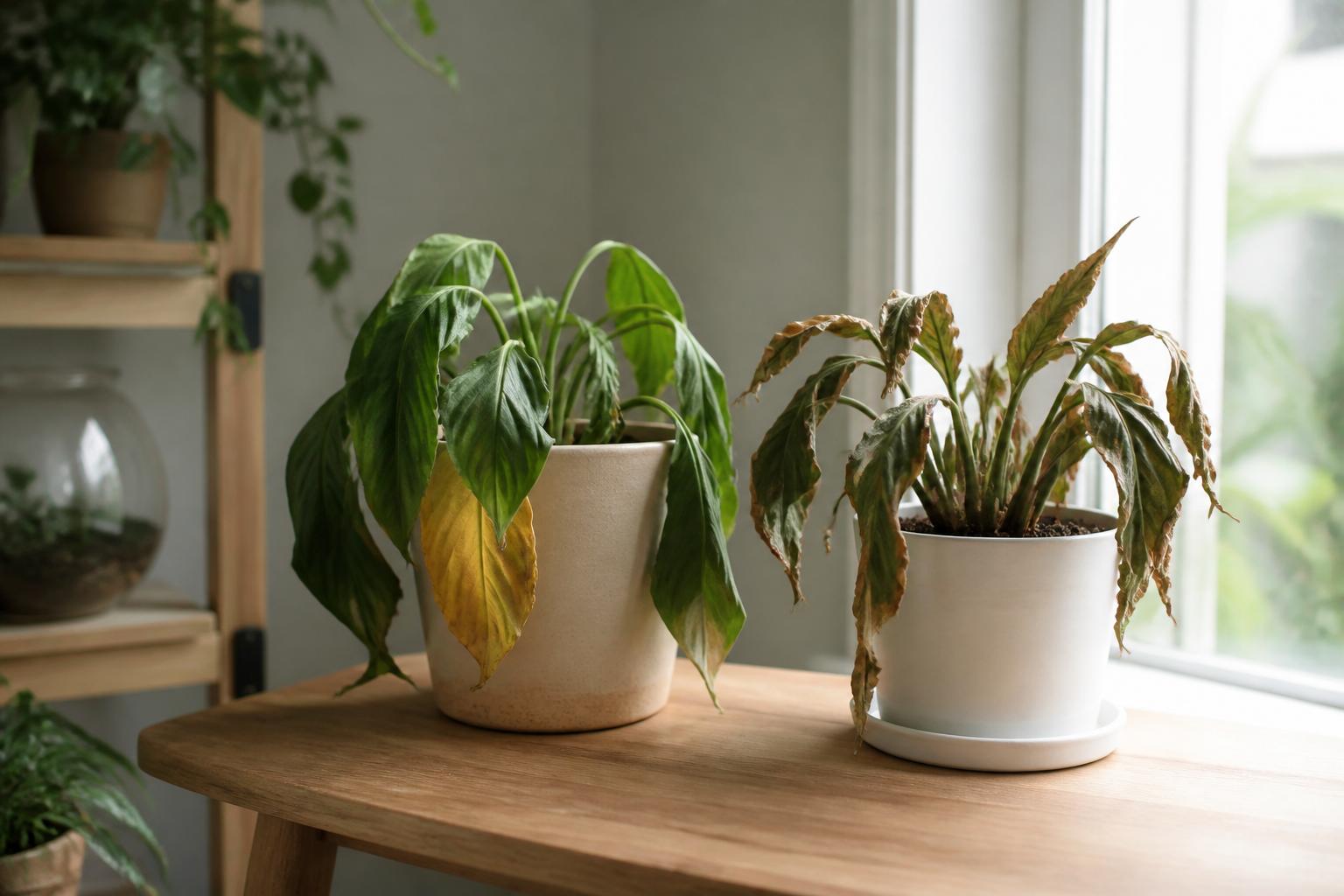
Few pests or diseases bother them 3. The main issue is overwatering, which leads to root rot 13. If the plant yellows or collapses, check the roots using our guide to root rot. Clemson also notes that black spots on the stems can be normal 1.
If you would like help picking or caring for plants, see our plant care service. New to houseplants? Our list of best houseplants for beginners is a good next read.
Sources
Frequently asked questions
How often should I water a ZZ plant?
Only after the mix has dried out. Extension sources range from every week or two to once or twice a month, depending on light, pot, and temperature, so check the soil rather than following a fixed schedule.
Can a ZZ plant live in low light?
Yes. It tolerates low light, though bright, indirect light speeds its slow growth.
Are ZZ plants poisonous to pets?
Yes. All parts are toxic if eaten, so keep the plant out of reach of pets and children.
Why is my ZZ plant turning yellow?
The most common cause is overwatering, which can lead to root rot. Check the soil and roots before watering again.
How do I propagate a ZZ plant?
Use leaf cuttings, or divide the plant. Growth is slow, so be patient.